[takeaways] • Japan is a vast archipelago of more than 6,800 islands, most of them uninhabited.
• Tokyo is home to more than 33 million people — nearly half the population of the UK.
• Japan's bullet trains already reach 320 km/h, with magnetic trains capable of 505 km/h planned for the 2030s.
• Removing shoes before entering a home is universally expected — always bring clean socks.
• Cherry blossom viewing (Hanami) and natural hot springs (Onsen) are among Japan's most beloved cultural traditions. [/takeaways]
For those of you who have never visited Japan before, the island nation likely seems pretty fascinating! From its incredible mountainous landscapes and superfast transport to its huge entertainment influence and culture, Japan welcomes millions of visitors from all over the world every single year.
Before you grab an eSIM for Japan and book a hotel in one of the country's sprawling metropolises, however, we're here to break down some Japan fun facts to help inspire any future trips you have in mind. How many of the following do you already know?
[esim flag="🇯🇵" label="Japan" data="10GB · 30 days" price="$9.40" href="/products/japan" benefits="Instant QR setup · Reliable 4G/5G · No contract"]Stay connected across Japan[/esim]
15 fun facts about Japan
Of course, there are more than 15 Japan fun facts out there, but today, we're sharing 15 of our favorites. Let's get started.
1. Japan is made up of thousands of islands
Beyond the main island, there are more than 6,800 different islands to visit across Japan, with most of them going uninhabited. In fact, Japan is technically a huge archipelago, and weirdly enough, a recent recount determined there are actually more islands here than previously estimated!
2. Tokyo is one of the most populous megacities in the world
The Japanese capital did, at one time, hold the title of the world's biggest megacity. According to reports, Tokyo now ranks third in the world in terms of megacity populations, just behind Dhaka in Bangladesh and Jakarta in Indonesia.
At last count, Tokyo is estimated to be home to more than 33 million people — just under half the total population of the United Kingdom!
3. Japan is famous for its extremely punctual public transport
If you're a weary commuter or you plain don't like being held up for any kind of engagement, chances are you'll love Japan's commitment to incredible public transport punctuality. In particular, the nation has a reputation for some of the best-organized trains in the world, with infrastructure investments and a cultural emphasis on punctuality being the main drivers for why your connections here will never be late.
4. Bullet trains are among the fastest in the world
Part of what makes the Japanese rail system so impressive is, of course, the incredible Shinkansen, or its world-famous bullet train service. These trains can reach up to a blistering 320 km/h!
However, Japan is aiming to go even faster in the next decade, looking to outpace China's Maglev with its own take on magnetic train tech. By the 2030s, you'll be able to board a train capable of traveling up to 505 km/h. Strap in!
5. Mount Fuji is the highest mountain in Japan
Mount Fuji is inarguably one of Japan's most famous landmarks, and this natural behemoth stands taller than anything else in the country. It's around 3,776m tall, and is thought to have taken shape more than 1,000 years ago, due to what experts believed to be volcanic activity.
Scaling the whole peak is hardly recommended for complete beginners, but there are plenty of opportunities to explore the area with wild camping, and many people visit the area for spiritual pilgrimage.
6. Japanese cuisine is recognized by UNESCO
UNESCO doesn't just recognize landmarks and historical artifacts! It also recognizes the Japanese cuisine of Washoku, referring to traditional dietary cultures.
Specifically, Washoku is a series of social practices that respect nature while sourcing and preparing food. It's all about sharing knowledge, welcoming deities, and coming together with family.
7. Sumo wrestling is Japan's national sport
Chances are you've heard of sumo wrestling before, but have you ever watched Japan's national sport? With an eSIM for Asia loaded and ready to go, it's easy for you to hunt down matches on the go while you explore Japan.
Sumo is all about staying inside the ring — get thrown out, and you lose! It's why so many wrestlers strive to build bulk so they are formidably strong and heavy.
8. Removing shoes indoors is an important custom
Taking your shoes off when you enter your home isn't completely unheard of elsewhere in the world, but in Japan, it is universally expected that you follow the rule. It is largely due to expectations of cleanliness.
However, it's also about showing respect — keeping your shoes on while visiting someone's home in Japan suggests that you don't respect their property, or even the people living there.
[warning]Forgetting to remove your shoes when entering a home, traditional inn, or certain restaurants in Japan can cause significant offence. When in doubt, look for a step up at the entrance (the genkan) — this is your cue to take your shoes off. Always bring clean socks![/warning]
9. Slurping noodles is considered polite in Japan
Weirdly enough, however, you don't have to worry about appearing rude if you want to take a good slurp of some noodles — when you're visiting Japan, anyway! Noodles are infamously difficult to eat without at least something of a display, and here, you'll never be looked down upon if you want to chow down.
That said, it's apparently a common misconception that you can just cause an absolutely riotous amount of noise, so try and strike table manners somewhere in the middle.
10. Cherry blossom viewing is celebrated through Hanami
Japan is also super-famous for its absolutely gorgeous blossom spray, and the tradition of experiencing blossom trees here is known as Hanami. Hanami roughly translates as "flower viewing" and frequently involves getting together in parties to watch the blossoms bloom!
In fact, you might even find it really competitive to get to some good blossom-watching spots, so when the weather's clear, be sure to reserve a space in your local park. Some Japanese firms will even give people time off work, specifically so they can go and reserve a Hanami spot.
[tip title="Plan your Hanami spot early"]The best cherry blossom viewing spots fill up fast during peak season (late March to early April). Check the Japan Meteorological Corporation's annual blossom forecast before you travel and reserve your spot well ahead.[/tip]
11. Japan has thousands of natural hot springs
If you're a bit of a geyser geezer, you'll love Japan's immense array of natural hot springs, referred to here as Onsen — and, again, they form an important part of the country's culture around enjoying the natural world.
Specifically, many people head to Onsen to enjoy hot, soothing baths, frequently set outdoors, flanked by wonderful blossom trees. It's entirely possible to enjoy Onsen and Hanami at the same time — and why not?
[tip title="Combine Onsen and Hanami"]Some of Japan's most celebrated Onsen destinations, including Hakone and Nikko, are also famous for their cherry blossom displays. Visiting in late March or early April gives you the best chance of experiencing both at once.[/tip]
12. Japan has one of the highest life expectancies globally
Japan has ranked right near the top of the world's highest life expectancies for various reasons, mainly thanks to natural diets that put people at lower risk of heart disease and cancer — obesity is very low here (despite the sumo wrestling!).
It's estimated that Japanese men live to just over 81 years old on average, while Japanese women live to just over 87 years!
13. Japan has the world's busiest pedestrian crossing
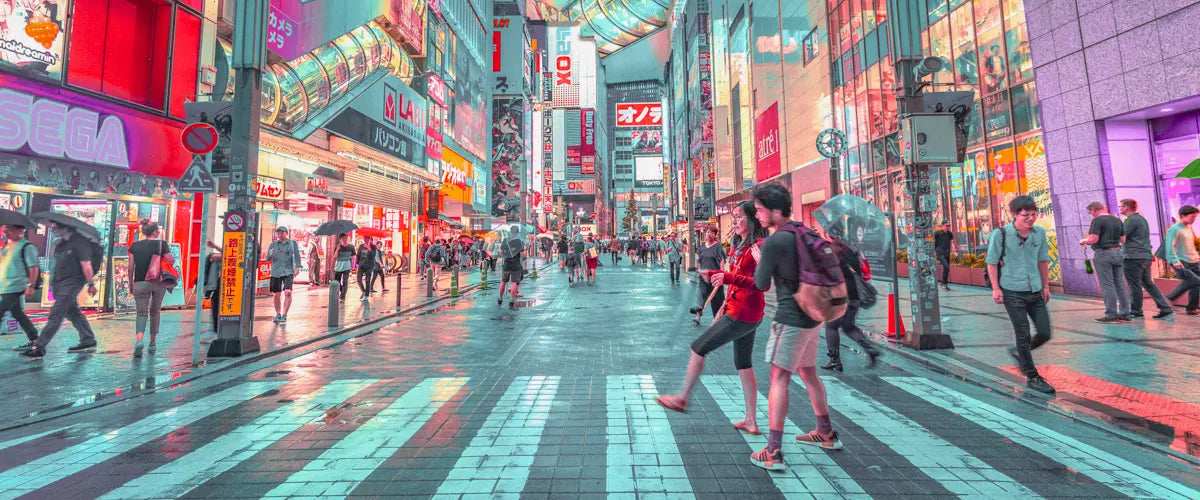
Yes — believe it or not, the Shibuya Crossing in Tokyo is thought to be the most bustling pedestrian walkway on the planet. At peak times, thousands of people will cross the street here, giving it the nickname of "the scramble"! However, as you'd expect from Japan, these immense crowds are remarkably well-organized.
14. The number four is considered unlucky in Japanese culture
Whether or not it's a lucky number for you personally, in Japan, the number four is considered a bad omen all around. It's somewhat due to the fact that "four" and "death" are very closely spoken in Japanese. In fact, some larger numbers that include four as a digit are called "double death" (24), "after death" (45), and "to suffer until death" (49)!
15. Vending machines are found almost everywhere in Japan
Japan is absolutely packed with vending machines as far as the eye can see — and you can buy almost anything from them! Beer, paper cups, cigarettes — you name it. And you'll even find them in remote spots as well as in the big cities!
Inspired to take a trip to Japan? Be sure to load up an eSIM for China, Japan, and South Korea, and get exploring with mobile data sorted out and ready to go.
[faq] [q]How many islands does Japan have?[/q] [a]Japan has more than 6,800 islands, making it one of the world's largest archipelagos. The vast majority are uninhabited. A recent government recount actually found more islands than had previously been recorded.[/a] [q]What is Hanami?[/q] [a]Hanami is the Japanese tradition of cherry blossom viewing, which roughly translates as "flower viewing." It typically takes place in late March and early April, when cherry blossom trees bloom across the country. It is a major cultural event involving picnics, parties, and gatherings in parks and gardens.[/a] [q]What is an Onsen?[/q] [a]An Onsen is a Japanese natural hot spring bath, often set outdoors in scenic surroundings. They are an important part of Japanese culture and are found throughout the country. Most Onsen have specific customs — including showering before entering and, in many cases, not allowing tattoos.[/a] [q]How fast do Japan's bullet trains go?[/q] [a]Japan's Shinkansen bullet trains currently reach speeds of up to 320 km/h. Japan is also developing magnetic levitation (Maglev) train technology, with speeds of up to 505 km/h planned for routes opening in the 2030s.[/a] [q]Is it rude to slurp noodles in Japan?[/q] [a]No — slurping noodles is generally accepted in Japan and is not considered rude. It is a natural result of eating hot noodles and is widely practiced. That said, causing an excessively loud noise at the table is not the expectation either, so a reasonable middle ground applies.[/a] [q]Do I need to remove my shoes in Japan?[/q] [a]Yes — removing your shoes before entering a home, traditional inn (ryokan), and many restaurants is universally expected in Japan. Look for a raised step or a row of shoes at the entrance as your cue. Keeping your shoes on is considered disrespectful. It is always worth bringing a clean pair of socks when exploring Japan.[/a] [/faq] [esim flag="🇯🇵" label="Japan" data="10GB · 30 days" price="$9.40" href="/products/japan" benefits="Instant QR setup · Reliable 4G/5G · No contract"]Stay connected across Japan[/esim]