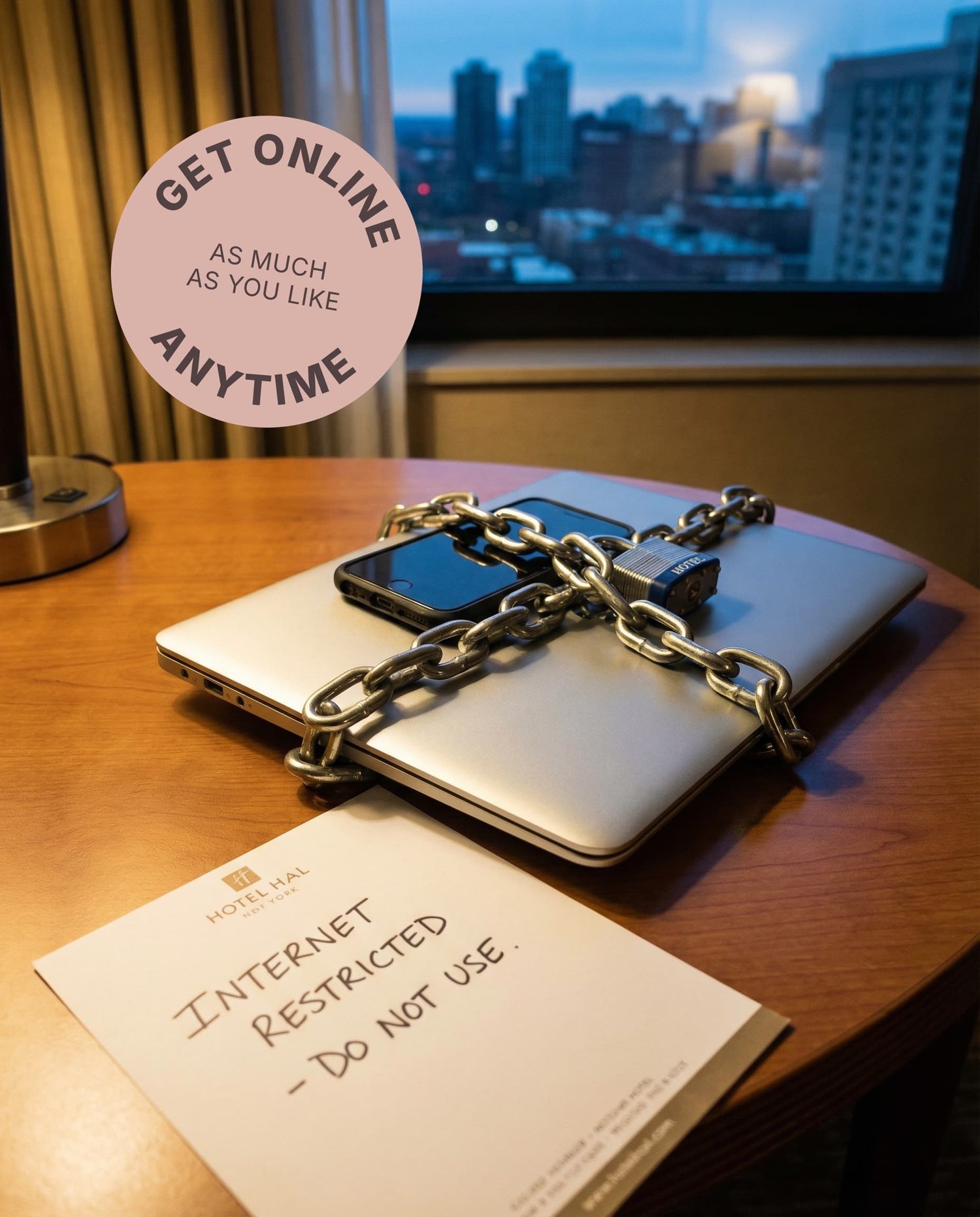
While you're often free to access the internet in most countries around the world, there will always be some restrictions in place. In fact, there are a few territories that restrict more content, apps, and online activities than most.
Countries that restrict internet access may do so for a variety of reasons, but beyond that, it's always important to know what local boundaries are before you arrive in a new destination. For example, while a SIMOVO eSIM with unlimited data will certainly allow you to connect to a 4G or 5G data source with ease, you still might face restrictions on what you can use mobile data for.
The last thing you'll need is to get to your holiday destination and find that you can't access Instagram, TikTok, or Facebook — meaning it's time to brush up on the most restrictive nations worldwide, at least when it comes to internet access. Let's dive in.
Why countries restrict internet access
Countries and governments may restrict internet access within their borders for political, censorship, or protection reasons. For example, some nations prevent people from accessing information that might go against the messaging of government parties.
In other cases, governments may completely restrict access to internet sites outside of the country, meaning users only ever get a small portion of what's available on the web. That, of course, means that some mobile apps may not work at all, meaning citizens and tourists only have a limited pool of entertainment and media to access.
Censorship and internet restrictions are extremely controversial because they fly in the face of what many believe should be a free tool for all to access. However, some governments argue that restricting access may also help to protect their citizens.
For instance, many countries have age verification restrictions set up to prevent children from accessing adult content and services. In others, using online shopping or gambling may be prohibited without proof of ID or a payment method. And, in those nations and US states where gambling is completely banned, sites such as online casinos can be completely blocked off.
Crucially, for a responsible adult traveler, not having full access to internet browsing, streaming, and apps can be frustrating. It's why many people choose alternative routes around accessing the content they want, such as via Virtual Private Networks (VPNs) — more on those a little later on.
Countries that restrict internet access
There are many nations that restrict what you can access on the internet at any given time, and the most infamous of these include China, Iran, North Korea, Russia, and the UAE.
While these are arguably the most extreme cases of countries that restrict internet access, you may still find that countries you visit have restrictions in place regarding specific websites and content. For example, Australia led the charge on restricting social media sites and apps to people over 16 back in December 2025, a world-first that led to several European nations to consider similar measures.
| Country | Key Mechanism | Notable Blocks |
|---|---|---|
| China | The Great Firewall | Google, WhatsApp, Facebook, Instagram, YouTube |
| Iran | Digital blackouts, high fees | Most Western platforms and social media |
| North Korea | Near-total restriction | All foreign media and internet |
| Russia | Throttling and blackouts | YouTube, most foreign social media |
| UAE | Censorship and filtering | VoIP services, some social media |
Let's take a closer look at the most restricted countries and what you hypothetically can and can't access online while traveling.
China
According to Freedom House, which measures internet freedoms across the world, China offers some of the harshest online restrictions.
China reportedly blocks access to unauthorized VPN workarounds, implements strict social media account policies, and even reportedly erases anti-government sentiments. China also imposes what has become known as "The Great Firewall", effectively restricting search results and blocking IPs.
[tip title="Visiting China?"]It's worth brushing up on WhatsApp restrictions in China before you travel if you want to keep in touch with people back home.[/tip]Iran
Iran has taken a step further by imposing digital blackouts on its citizens, with a lockdown affecting around 92 million people taking effect in January 2026 (as an example). In this case, the blackout reportedly occurred following protests and governmental crackdowns.
As of the time of writing, Freedom House rates Iran's internet freedoms as almost as non-existent as China's. The Iranian state has imposed higher internet fees to prevent access, and many people have faced the death penalty based on content they shared online.
[warning]Iran has imposed severe legal penalties — including the death penalty — for content shared online. If you are travelling to Iran, exercise extreme caution about anything you post, share, or access on the internet.[/warning]North Korea
North Korea infamously restricts what its citizens can see, do, and know, and Amnesty International refers to the country as The Surveillance State. NK residents cannot access any online media outside of the country's jurisdiction, and smartphones have to be pre-approved. Phones cannot even make calls outside of the country.
[warning]North Korea is not a recommended travel destination. Internet access there is severely limited and closely monitored by the state.[/warning]Russia
According to Freedom House, Russia infamously imposes data blackouts and throttles services such as YouTube, with most foreign social media platforms and streamers completely blocked.
It's even noted that the government possesses an internal list of social media users and bloggers with a reach of more than 10,000 followers, who must submit to regulatory control or face penalties.
United Arab Emirates
The UAE imposes significant web restrictions, particularly rooted in censorship, and with government sources reportedly watching journalistic internet use. Like other nations in this guide, the area operates under an extensive blocking and filtering regime.
[warning]Both citizens and visitors to the UAE must be vigilant about the content they post online — even peaceful content deemed anti-authority can carry legal consequences.[/warning]What services are blocked in restricted countries
Internet usage, such as instant messaging, using social media, adult content, and even some streaming and news platforms are blocked and banned in restricted countries. Those we've listed above particularly do this to try to maintain political and societal control.
That means, when traveling in restricted countries, you may not be able to use services like WhatsApp, Gmail, TikTok, Facebook, Instagram, Reddit, BlueSky, X, or YouTube. In many cases, you also won't be able to use VoIP (Voice over Internet Protocol) apps and services, which allow you to make voice and video calls with mobile data.
And, again, VPNs are widely fought against by restricting countries, because they are commonly used as workarounds.
How to navigate the internet in restricted countries
The safest legal way to navigate the internet while visiting countries with restrictions is to use a reliable VPN provider, available to users aged 18 or over. VPNs encrypt internet traffic and allow you to access areas of the web you may be restricted from, by connecting you to servers based in other countries.
[warning]You must download and install your VPN before you arrive in a restricted country — you may not be able to access VPN providers once you are inside the country's network. There is also no guarantee that all VPNs will work, as some nations have imposed blocks on the most widely used services.[/warning] [tip title="eSIM as an alternative"]Using a China eSIM, for example, will usually allow you to bypass national restrictions without the need for a VPN. That said, it's still worth keeping vigilant about local laws and what you access.[/tip]Tips to stay connected while travelling
While it's always good practice to avoid countries that restrict your internet activities if you prioritize those freedoms, here are some quick travel tips to help you stay connected on the go, wherever you are:
- Choose apps that offer complete data encryption, such as WhatsApp.
- Keep a close eye on your data usage and top up with an eSIM if you need to.
- Try to download any online content you might want to watch or read before you go.
- Always have a portable battery to hand so you can keep devices charged.
- Never use unsecured public WiFi, regardless of where you travel.