[takeaways] • Mexican breakfast is a hearty, filling affair — typically served until around 10am and built around eggs, tortillas, beans, and tropical fruit.
• The five must-try Mexican breakfast dishes are migas, huevos rancheros, molletes, chilaquiles, and jugo verde.
• Coffee in Mexico is traditionally served with cinnamon and piloncillo (cane sugar) — a sweeter, spiced take worth trying even if you usually drink it black.
• Street food vendors are a great source of authentic Mexican breakfast — prioritize vendors with long lines of local customers.
• Never drink tap water in Mexico — bottled water only, and avoid ice in drinks unless it's confirmed to be purified.
• A SIMOVO eSIM for Mexico keeps you connected to compare eateries, find vendors, and navigate wherever your appetite takes you. [/takeaways]
They famously say that breakfast is the most important meal of the day — and that certainly shouldn't change while you're on vacation. Between us, the SIMOVO crew has enjoyed a wide range of Mexican breakfast dishes while adventuring abroad, and we're keen to share as many of our favorites as possible.
Whether you're a foodie or are just looking for some local breakfast ideas that go against your usual cereal and toast, here are some tasty morning treats worth heading out for.
Breakfast in Mexico: an overview
Breakfast in Mexico is often just as hearty and filling as you'd expect from evening meals. Typically served until around 10am, you'll find eggs, tortillas, beans, and tropical fruit making up much of what's on offer at local eateries. If you like egg dishes, breakfast may well become your favorite meal of the day while exploring Mexico — restaurants here offer a remarkable variety of egg preparations well beyond the hard-boiled or scrambled.
Breakfast drinks, too, tend to be something special. Coffee is traditionally served with cinnamon and piloncillo (cane sugar), meaning if you already have a sweet tooth, you're in for an extra treat. Mexican breakfasts are designed to be super filling — the idea being that you'll have enough energy to get through to early afternoon. And you won't always need to sit down at a restaurant: Mexican breakfast is just as popular with street food vendors.
[esim flag="🇲🇽" label="Mexico" data="10GB · 30 days" price="$22.50" href="/products/mexico" benefits="Instant QR setup · Reliable 4G/5G · No contract"]Stay connected across Mexico — compare eateries and find vendors on the go[/esim]
Best Mexican breakfast dishes you need to try
The SIMOVO team recommends trying migas, huevos rancheros, molletes, chilaquiles, and jugo verde wherever possible. These are some of the staple favorites you'll see on breakfast menus across the country — though there will naturally be more dishes to explore based on your own tastes and dietary needs.
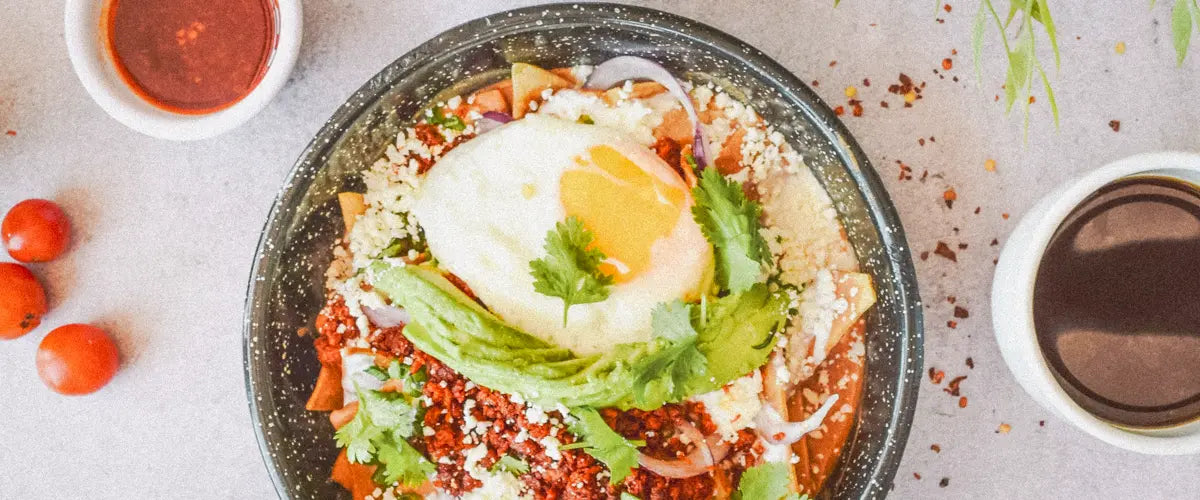
[numbered title="Migas" pill="Egg and tortilla dish"]Simple, classic, and super warming, migas is a great breakfast for anyone who has time to sit down and fuel up for the day. Made with fried corn tortillas scrambled with eggs, it's typically served with refried beans, diced tomato, and jalapeños — with salsa and avocado on the side. Add shredded cheese to taste. A traditional touch: using leftover tortillas makes the dish extra crispy.[/numbered] [numbered title="Huevos Rancheros" pill="Classic Mexican breakfast"]A must-try Mexican breakfast that combines eggs, salsa, cheese, cream, onions, and a flour or corn tortilla. Eggs are served sunny-side up, topped with cilantro and avocado, with refried beans on the side. One of the most filling options on the Mexican breakfast menu — ideal before a full day of exploring, including a visit to Mexico's best beaches. This dish has traveled widely across North America, but the best version is always the one made in Mexico itself.[/numbered] [numbered title="Molletes" pill="Mild and bean-based"]A great choice if you want something a little milder. A crusty roll is cut in half, toasted, and topped with refried beans and pico de gallo — a fresh salsa of jalapeño, tomato, cilantro, onion, and citrus. Cheese is a common addition, with some versions also including ham and eggs. If you're eager to try new flavors without a heavy heat kick, molletes are the place to start.[/numbered] [numbered title="Chilaquiles" pill="Tortilla and salsa"]Found at most restaurants, cafes, and vendors across Mexico's biggest cities, chilaquiles are made with quartered corn tortillas fried or simmered in either salsa verde or salsa roja until softened, then topped with queso fresco, raw onion, and eggs. Often described as "nachos for breakfast" — you can usually choose your protein, salsa color, and cheese type.[/numbered] [numbered title="Jugo Verde" pill="Breakfast drink"]The ideal companion to any of the above, jugo verde is a green juice typically made from spinach and pineapple, along with cactus paddle, celery, and lime juice — with some recipes adding kale, apple, and ginger. It's customizable to your own tastes, so try different versions across vendors as you explore and find the combination that works best for you.[/numbered]
Travel tips for foodies in Mexico
If you're traveling to Mexico largely to explore the cuisine and traditional drinks, here are some final tips to keep in mind before you fly.
[tip title="Follow the line at street food vendors"]Long lines with plenty of local customers are the most reliable sign of quality and authenticity. Prioritize vendors using fresh ingredients — and that includes the tortillas.[/tip] [tip title="Vegetarian and vegan options are widely available — just ask"]Many Mexican breakfast dishes can be adapted for vegetarian and vegan diets. Ask for "sin crema" (no cream) and "sin queso" (no cheese) as a starting point. Not everywhere will be accommodating, so it's worth researching dining options online before you travel.[/tip] [tip title="Book a food tour for the best value and variety"]One of the best ways to explore Mexico's food and drink scene is to book a food tour with a local operator. It's a great way to stretch your budget while sampling a little bit of everything — and a local guide will know the best spots that aren't on any tourist map.[/tip] [warning]Never drink tap water in Mexico — there is a risk of bacterial contamination, even in areas where water is technically purified at source, as it can become contaminated as it travels through pipes. Stick to bottled water throughout your trip, and avoid ice in drinks unless it is confirmed to be purified.[/warning] [faq] [q]What do people eat for breakfast in Mexico?[/q] [a]Mexican breakfast is typically hearty and egg-focused, built around tortillas, refried beans, salsa, and tropical fruit. The most popular dishes include migas (scrambled eggs with fried tortillas), huevos rancheros (eggs on tortillas with salsa), molletes (toasted rolls with beans and pico de gallo), and chilaquiles (tortillas in salsa topped with eggs and cheese). Jugo verde — a green juice made from spinach, pineapple, and other vegetables — is a popular breakfast drink.[/a] [q]What is jugo verde?[/q] [a]Jugo verde is a Mexican green juice typically made from spinach, pineapple, cactus paddle, celery, and lime. Some recipes also include kale, apple, and ginger. It's a popular breakfast drink across Mexico and is usually customizable — try different variations at different vendors to find the blend you like best.[/a] [q]What is the difference between chilaquiles and migas?[/q] [a]Both dishes use corn tortillas and eggs, but they're prepared differently. Migas uses fried tortilla strips scrambled directly with the eggs, while chilaquiles uses quartered tortillas simmered in salsa (verde or roja) until softened, then topped with eggs and cheese. Chilaquiles are saucier and salsier; migas are drier and crispier.[/a] [q]Are Mexican breakfast dishes spicy?[/q] [a]Not all of them. Molletes, for example, are one of the milder options on the Mexican breakfast menu. Huevos rancheros and migas typically include jalapeños and salsa, but the heat level can usually be adjusted. If you're sensitive to spice, ask for dishes with less salsa or request milder options — most eateries and vendors are happy to accommodate.[/a] [q]Is street food safe to eat for breakfast in Mexico?[/q] [a]Mexican street food is generally safe to eat when you follow a few basic rules: choose vendors with long lines of local customers, look for stalls using fresh ingredients, and avoid anything that's been sitting out for a long time. Tap water and ice of unknown origin are the main risks — stick to bottled water and confirmed purified ice throughout your stay.[/a] [q]Do I need an eSIM for Mexico?[/q] [a]A SIMOVO eSIM for Mexico is a convenient way to stay connected throughout your trip — useful for finding the best breakfast spots, comparing eateries, researching vendors, and navigating between cities. It means no hunting for a local SIM card on arrival and no relying on patchy public WiFi.[/a] [/faq] [esim flag="🇲🇽" label="Mexico" data="10GB · 30 days" price="$22.50" href="/products/mexico" benefits="Instant QR setup · Reliable 4G/5G · No contract"]Get connected before you land in Mexico[/esim]