[takeaways] • Poland's six must-try dishes are placki ziemniaczane, bigos, pierogi, kotlet schabowy, flaki, and kielbasa.
• Pierogi can be enjoyed savory or sweet, with fillings ranging from meat and sauerkraut to fruit — and they've even gained popularity across North America.
• Kielbasa isn't one single sausage, but a whole category covering hundreds of regional varieties, from smoky kabanos to garlicky country sausage.
• Drinking alcohol in public is illegal in Poland — restaurant and bistro patios are fine, but streets and public squares are off-limits.
• Tap water is safe to drink in Poland, so ordering a carafe at the table can save money over bottled water.
• A Poland eSIM keeps you connected to research nearby restaurants and street food vendors as soon as you land. [/takeaways]
Poland is a country that's packed full of important history and intriguing cultural touchpoints — but what about its food and drink? If you have already tried a few Polish snacks and beverages at home, you might already have a taste of what to expect should you come traveling here. However, as always, the best Polish food is, oddly enough, served in Poland!
If you're planning a trip to Poland any time soon — to explore its stunning cities, for example — it's worth wising up on what to expect from the local cuisine. In this guide, we take a look at some of the best-loved Polish food you can enjoy during your travels and break down some foodie travel advice to keep your trip tasty and safe.
Polish food worth trying
Tastes vary, of course, but having surveyed the SIMOVO team on our favorite Polish dishes, we've come up with a firm list of six culinary delights we think everyone should try at least once (or, at least seek out dietary alternatives). Traditional Polish dishes and comfort food we recommend checking out include placki ziemniaczane, bigos, pierogi, kotlet schabowy, flaki, and kielbasa.
Whether you'd like to try these recipes out for yourself at home before you travel is entirely up to you! However, as mentioned, the absolute best way to enjoy Polish cuisine is to visit Poland itself. So, let's break down these dishes and explore why you should hunt down some street food vendors or book in at local restaurants.
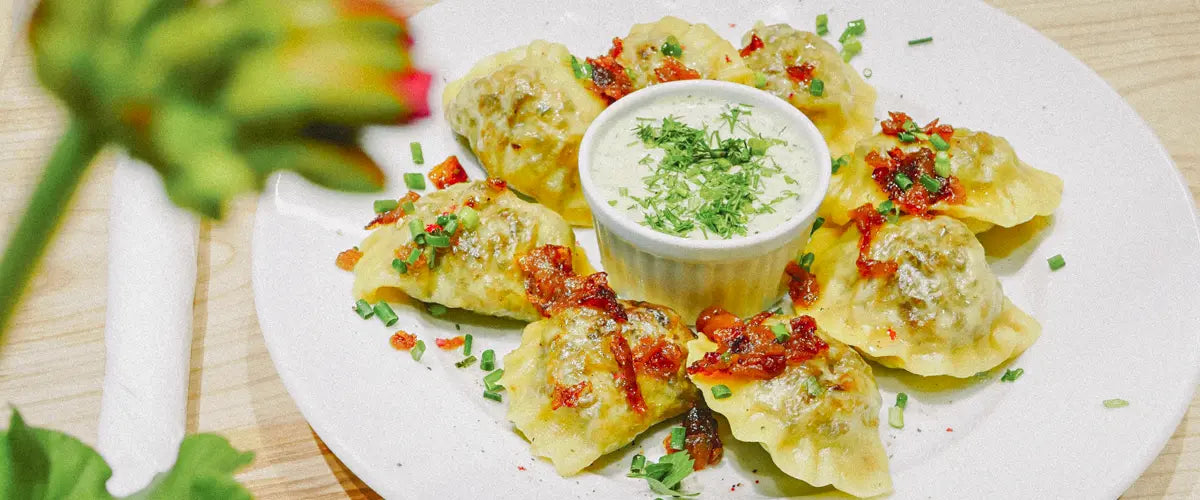
[numbered title="Placki ziemniaczane" pill="Potato pancakes"]Placki ziemniaczane are traditional pancakes made from potato that, according to Barbara Rolek, are typically enjoyed as a replacement for meat during Lent. In particular, they have roots in the village of Gwizdały, and they've taken on genuine fame beyond their humble beginnings. Made from grated raw potatoes, these crispy, moreish pancakes are great served with vegetables as part of the batter, or with meat (if you eat it) as part of a full, main meal. Chances are, you'll find some different twists on how it's prepared across the country.[/numbered] [numbered title="Bigos" pill="Hunter's stew"]Poland is just as famous for its hearty stews as it is its potato pancakes and vodka, and bigos is a sauerkraut, meat, and cabbage dish that's spicy and warming — great if you're visiting Poland during the colder months of the year and need some inner fire! The recipe available to follow at Everyday Healthy Recipes offers a fantastic introduction to this dish, meaning it's well worth reading and maybe even trying for yourself before you dive into any restaurant menus on your next trip abroad. Tastes vary, but we can't deny that bigos is one of the most filling and warming Polish dishes.[/numbered] [numbered title="Pierogi" pill="Dumplings, sweet or savory"]If you've done any research into Polish food at all, there's an excellent chance you've heard of Pierogi. These delightful dumplings are certainly regarded as one of the nation's most famous dishes, and as Natalia Mętrak-Ruda states, you can enjoy them savory or sweet (depending on your taste). Meat fillings range from chicken to beef and pork, while you may also find duck variations and even sheep's cheese. And, yes, you can also enjoy them with sauerkraut, or if you prefer a sweet version, fruit is a must. Mętrak-Ruda also confirms that these dumplings are somewhat popular in Canada, too, so look out for them across North America![/numbered] [numbered title="Kotlet schabowy" pill="Breaded pork cutlet"]Kotlet schabowy is a tasty cut of pork that's traditionally breaded and fried in a pan — it's one of several Polish dishes that may have international variations, but again, you can't beat the traditional and best. It's a nice, simple recipe at its heart, but this hearty, crunchy main dish leaves one of the most lasting culinary impressions you'll take home from Poland with you. If you'd like to try your own version before giving the real deal a try when you visit Poland, there's an All Recipes guide that keeps it nice and straightforward.[/numbered] [numbered title="Flaki" pill="Tripe soup"]Flaki, or flaczki, is a traditional Polish soup that may be an acquired taste to some people, but if you can, we insist you give it a try. It has some international reach, and it's typically made with beef tripe, herbs, and vegetables. The main difference with the Polish version is, according to Polish Your Kitchen, the way it is prepared and the regional spices and herbs that are used. If you'd like to try it for yourself, the aforementioned site has a fantastic walkthrough — but, be prepared for plenty of ingredients if you want to get it right! Save yourself some time, perhaps, and enjoy it prepared the traditional way when you arrive in Poland. Your call![/numbered] [numbered title="Kielbasa" pill="Regional sausage"]Kielbasa is a word that's used across Poland to refer to regional takes on the humble sausage — meaning that there are hundreds of different ways to enjoy it. According to Polana, the word is used to mainly talk about smoked sausage of Polish origin, but it actually applies to lots of different regional takes. For example, there's white sausage, traditionally eaten with soup, the snacky and smokey kabanos sausage, and country kielbasa or sausage, which tends to be a little on the garlicky side. We seriously recommend you take a look at different varieties across the regions if they fit in with your dietary needs and preferences.[/numbered] [esim flag="🇵🇱" label="Poland" data="10GB · 30 days" price="$8.50" href="/products/poland" benefits="Instant QR setup · Reliable 4G/5G · No contract"]Research nearby restaurants and street food vendors as soon as you land[/esim]
While you're working up an appetite reading through these Polish dishes, make sure you have a Poland eSIM installed to your phone so you can research nearby restaurants and street food vendors once you arrive. A SIMOVO eSIM makes sure you're always connected to the best available mobile network in the region, and as you top up with data before you go, you won't have to worry about coming home to enormous roaming bills.
Poland travel tips for foodies
If you're planning to explore Poland's cuisine to its fullest on a future trip, here are some tried and tested ideas to help make your visit as safe, accessible, and enjoyable as possible.
[tip title="Expect around 10% in tips as service charges"]When dining out in Poland, expect to pay around 10% in tips as service charges. Generally, these will be added to payments you make by card, but always check the bill beforehand (and tip based on your experience, of course!).[/tip] [tip title="Carry cash for street food vendors"]It's always a good idea to keep some local currency to hand in change if you want to try street food. Not all vendors or smaller businesses will accept card payments, so don't fall back on your plastic for the sake of it.[/tip] [tip title="Tap water is safe — order a carafe to save money"]There's no need to worry about tap water safety here, so only buy bottles if you have to. In fact, you may be able to save money on water at the table by ordering a carafe of tap H2O as opposed to the bottled kind![/tip] [warning]You won't be able to drink alcohol in public in Poland — meaning streets or public squares are out of the question if you want to take beers outside. Restaurant and bistro patios, however, are typically fine — just don't drink beyond the perimeter![/warning] [faq] [q]What are the best Polish dishes to try?[/q] [a]Poland's six must-try dishes are placki ziemniaczane (potato pancakes), bigos (hunter's stew), pierogi (dumplings), kotlet schabowy (breaded pork cutlet), flaki (tripe soup), and kielbasa (regional sausage varieties).[/a] [q]Can pierogi be sweet as well as savory?[/q] [a]Yes — pierogi can be filled with savory ingredients like meat, sauerkraut, or cheese, or sweet fillings like fruit. They're also popular beyond Poland, with a notable following across Canada and North America.[/a] [q]Is it legal to drink alcohol in public in Poland?[/q] [a]No — drinking alcohol in public places like streets, parks, and public squares is illegal in Poland and can result in a fine. Restaurant and bistro patios with the proper permits are exceptions, as are certain designated zones in some cities.[/a] [q]Is tap water safe to drink in Poland?[/q] [a]Yes — tap water in Poland is safe to drink, so there's no need to buy bottled water unless you prefer to. Ordering a carafe of tap water at a restaurant can also save you money compared to bottled options.[/a] [q]Do you need to tip in Poland?[/q] [a]Tipping around 10% is customary when dining out in Poland. This is often added to card payments as a service charge, so it's worth checking your bill before adding an additional tip.[/a] [q]Do I need an eSIM for exploring Polish food?[/q] [a]A Poland eSIM is a convenient way to stay connected while researching nearby restaurants and street food vendors — useful for checking reviews and navigating between cities. It means no hunting for a local SIM card on arrival and no unexpected roaming bills.[/a] [/faq] [esim flag="🇵🇱" label="Poland" data="10GB · 30 days" price="$8.50" href="/products/poland" benefits="Instant QR setup · Reliable 4G/5G · No contract"]Get connected before you land in Poland[/esim]