[takeaways] • The four best places to visit in the Dolomites are Cortina d'Ampezzo, Val Gardena, Alpe di Siusi, and Tre Cime di Lavaredo.
• Mountain weather in the Dolomites changes rapidly — always pack layers, waterproofs, and proper hiking boots regardless of the forecast.
• Some trails stay closed well into spring — always check opening dates for specific routes before building your itinerary around them.
• A rental car is the best way to get around — but whoever drives must be comfortable on mountain roads, switchbacks, and off-road tracks.
• Summer and early fall offer the most spectacular scenery for photography. Winter is exclusively for skiers and winter sports enthusiasts. [/takeaways]
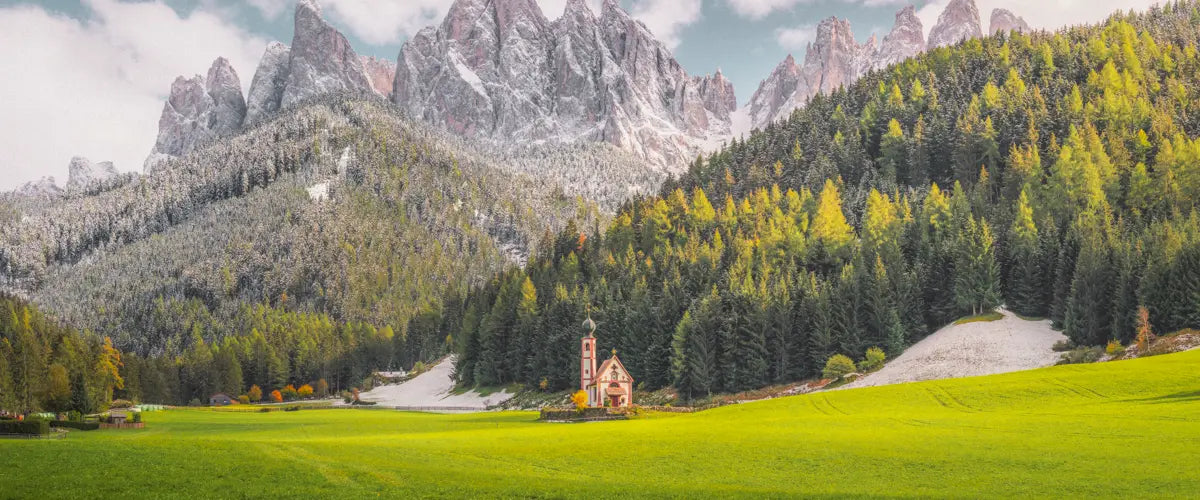
There's more to Italy than historic cities, delicious cuisine, and romantic canal journeys. Plenty of people who visit Italy are looking to explore the great outdoors — from stunning peaks to sparkling lakes. The best spot to head to as an adventurous traveler is the Dolomites, a mountain range in the northeast of Italy home to spectacular hiking, mountain climbing, and skiing experiences.
Building the perfect Dolomites Italy itinerary isn't easy if you're new to the idea of an adventure trip. We've put our heads together to create a guide on how to make the most of this stunning corner of the world — with itinerary templates, route ideas, and practical advice for scenic drives, hiking trails, and more. Before you jump in, always take up an eSIM for Italy to make sure you're covered for mobile data throughout your travels.
Dolomites Italy itinerary overview
It's easy to get a little overwhelmed by the idea of an adventure trip in a range as broad as the Dolomites — knowing where to travel and which routes to take isn't always obvious. The itinerary templates below are built around ease of travel, but you can always add and remove elements as you see fit.
[warning]Driving mountain roads in the Dolomites requires genuine experience and confidence — routes involve switchbacks, narrow passes, steep gradients, and in some seasons, ice or loose gravel. Always book an appropriate rental vehicle (ideally a 4WD or SUV) well in advance, and confirm that your designated driver is comfortable with mountain road conditions before you arrive.[/warning]
Getting to the Dolomites isn't as complicated as you might think — you can travel from Venice in the northeast and be ready to take to the road within two to three hours of landing. Pack plenty of layers and consider damp weather — yes, even in Italy — and always bring comfortable hiking boots with proper grips.
[tip title="The Dolomites work beautifully as part of a wider Italy trip"]If you're planning a broader Italian adventure, consider the Dolomites as the icing on the cake. Our Italy itinerary guide breaks down the best places to visit nationwide and pairs well with the templates in this guide.[/tip]
It's also easy to assume that all you'll do here is scale mountains and go on off-road drives. While that makes up a considerable chunk of any trip, there are plenty of town and village escapes to explore, with quaint cafes, restaurants, bars, and shops — plus several upmarket resorts across the region as the area has grown increasingly popular with visitors over the past decade.
Best places to see in the Dolomites
There's a great deal to see and do in the Dolomites — and of the many highlights, we recommend prioritizing Cortina d'Ampezzo, Val Gardena, Alpe di Siusi, and Tre Cime di Lavaredo.
[numbered title="Cortina d'Ampezzo" pill="Premier ski resort and base"]The ideal home base for any Dolomites trip — excellent skiing access, high-end accommodation, shops, and restaurants, plus easy reach of the Croda da Lago, Tofane, and Cristallo mountain groups.[/numbered] [numbered title="Val Gardena" pill="175km of slopes and villages"]A premier ski resort with around 175km of slopes, alongside delightful village scenes at Selva and Santa Cristina — famous for local cuisine, wood carvings, and warm Dolomite hospitality.[/numbered] [numbered title="Alpe di Siusi" pill="Highest alpine pastures in Europe"]The highest alpine meadow in Europe — breathtaking for photographers and nature lovers, with high-octane cycling and hiking trails and access to local food and village hospitality.[/numbered] [numbered title="Tre Cime di Lavaredo" pill="The three peaks"]Three iconic majestic peaks in the Sesto Dolomites — a three-hour traverse at a reasonable pace, with mountain huts available for overnight stays for those who want to go deeper into the landscape.[/numbered]
Cortina d'Ampezzo
Cortina d'Ampezzo is a fantastic base for any trip in the Dolomites — particularly noteworthy as a superb site for skiers with access to the Croda da Lago, Tofane, and Cristallo mountain groups. We recommend it as the place to establish your home base when you arrive. It also offers high-end accommodation, shops, and restaurants that make a comfortable launching pad for adventures further afield.
Val Gardena
Val Gardena is another premier ski resort in the Dolomites, famous for offering access to around 175km of slopes that only the bravest winter sports enthusiasts dare tackle. Beyond the skiing, you'll also find delightful village scenes at Selva and Santa Cristina — both famous for their local cuisine, wood carvings, and genuine hospitality.
Alpe di Siusi
Alpe di Siusi is a truly incredible natural spectacle — the highest alpine meadow in Europe. It's an absolute must-visit for photographers and nature lovers, as well as a high-octane cycling and hiking destination. Different trails and routes give access to local food and village hospitality throughout the season.
[warning]Mountain weather in the Dolomites changes rapidly and without warning — conditions that appear clear and calm at the trailhead can deteriorate quickly at altitude. Always pack waterproof layers, carry emergency food and water, wear proper hiking boots with grips, and let someone know your planned route before you set out. Altitude sickness can affect visitors at higher elevations — ascend gradually and pay attention to how you feel.[/warning]
Tre Cime di Lavaredo
Sometimes known as "the three peaks", the Sesto Dolomites offer up this trio of majestic mountains — among the most iconic and photographed landscapes in all of Italy. The famous traverse takes around three hours at a reasonable pace.
[tip title="Mountain huts at Tre Cime allow for an overnight stay in the landscape"]The Tre Cime area has several mountain huts (rifugi) where you can stay overnight — a genuinely memorable experience if you want to get closer to nature and don't mind sacrificing everyday hotel comfort for spectacular scenery at altitude. Book well in advance as spaces are limited during peak season.[/tip]
Dolomites itineraries based on the length of your trip
It's entirely possible to spend more than 14 days in the Dolomites and still find fascinating things to do. Here are some rough templates based on the top places listed above — add to and adjust them as you go.
[tip title="Always check trail opening and closing dates before you travel"]Some trails in the Dolomites stay closed well into spring — and some close earlier in fall than visitors expect. If there are specific routes or hikes you're planning your itinerary around, check current opening dates before booking. Nothing is more frustrating than arriving to find your target trail is still gated.[/tip]
Dolomites itinerary for 7 days
- Days 1–2: Start in Cortina, explore the villages, and establish a base.
- Days 3–4: Head to Val Gardena and explore towns like Ortisei.
- Days 5–6: Take on some high-octane skiing or hiking at Alpe di Siusi.
- Day 7: Spend a day exploring and photographing the stunning Tre Cime di Lavaredo.
Dolomites itinerary for 10 days
- Days 1–3: Start in Cortina, checking out the local sights at Selva di Cadore and Lago di Sorapis.
- Days 4–5: Head up toward Tre Cime di Lavaredo, circling around Lago di Braies and returning to Cortina.
- Days 6–8: Venture west and explore the Falzarego Pass, setting a base at Val Gardena.
- Days 9–10: Continue exploring Val Gardena and try skiing at Alpe di Siusi.
Dolomites itinerary for 14 days
- Days 1–4: Set your base at Cortina and travel a circuit exploring Selva di Cadore, the Falzarego Pass, and Lago di Sorapis.
- Days 5–7: Head east and north toward Tre Cime di Lavaredo, then back through Dobbiaco and Lago di Braies.
- Days 8–10: Explore Puez Odle Nature Park and head toward Alpe di Siusi.
- Days 11–14: Set your final base at Val Gardena and take day trips toward Sciliar Catinaccio and Marmolada.
Best time to visit the Dolomites
The best time to visit the Dolomites depends entirely on what you want to do. The area tends to get fairly busy as summer progresses — but by early fall, the weather plateaus and crowds begin to drop off.
[tip title="Summer and early fall for scenery, winter for skiing"]The Dolomites look most spectacular during summer and into early fall — if photography and landscape exploration are your priorities, book around then. Winter is exclusively for skiers and winter sports fans. Shoulder season visitors should check trail opening dates carefully, as some routes stay closed well into spring or close earlier in fall than expected.[/tip] [faq] [q]What are the best places to visit in the Dolomites?[/q] [a]The four best places to visit in the Dolomites are Cortina d'Ampezzo (the ideal base, with premier ski access and high-end amenities), Val Gardena (175km of slopes and charming villages including Selva and Santa Cristina), Alpe di Siusi (the highest alpine meadow in Europe, spectacular for photography and hiking), and Tre Cime di Lavaredo (the iconic three peaks of the Sesto Dolomites, with a three-hour traverse and mountain hut accommodation).[/a] [q]What is Tre Cime di Lavaredo?[/q] [a]Tre Cime di Lavaredo — "the three peaks" — is the most iconic landmark in the Dolomites, consisting of three distinctive rocky peaks in the Sesto Dolomites near the Austrian border. The classic circular hike around the three peaks takes approximately three hours at a comfortable pace and is considered one of the most spectacular walks in the Alps. Mountain huts (rifugi) in the area allow for overnight stays. The route is seasonal — always check current conditions and opening dates before visiting.[/a] [q]When is the best time to visit the Dolomites?[/q] [a]Summer (June to August) and early fall (September to October) are the best times for hiking, photography, and landscape exploration — the scenery is at its most spectacular and most trails are fully open. Winter (December to March) is the season for skiing and winter sports. Spring (April to May) can be unreliable as some higher trails remain closed and snow lingers. Always check specific trail opening dates regardless of season.[/a] [q]How do I get to the Dolomites?[/q] [a]The most common route to the Dolomites is via Venice Marco Polo Airport — from there, the drive northeast to Cortina d'Ampezzo takes approximately two to three hours by car. Verona and Innsbruck (Austria) are also viable entry points. A rental car is strongly recommended for getting around once you arrive — mountain roads require an experienced driver and an appropriate vehicle, ideally a 4WD or SUV.[/a] [q]How long should I spend in the Dolomites?[/q] [a]Seven days is the minimum for a meaningful Dolomites trip — enough to cover Cortina d'Ampezzo, Val Gardena, Alpe di Siusi, and Tre Cime di Lavaredo at a reasonable pace. Ten days allows for a more relaxed experience with additional stops including Lago di Braies and the Falzarego Pass. Fourteen days is ideal for first-time visitors who want to explore the full range of the region without feeling rushed.[/a] [q]Do I need an eSIM for Italy?[/q] [a]A SIMOVO Italy eSIM is one of the most practical additions to any Dolomites trip. It activates on landing, connects you to Italy's best available networks, and gives you reliable data for navigation on mountain roads, finding mountain huts, checking trail conditions, and staying in touch throughout your adventure — without roaming charges when you get home.[/a] [/faq] [esim flag="🇮🇹" label="Italy" data="10GB · 30 days" price="$8.50" href="/products/italy" benefits="Instant QR setup · Reliable 4G/5G · No contract"]Stay connected across the Dolomites and Italy — no roaming charges[/esim]