Whether you're keen to get some sunbathing in or to explore the country's gorgeous landscapes, planning a Turkey itinerary for your first trip is ideal if you want to pack in as much adventure as possible. This guide breaks down some of the top sights, sounds, and experiences you can take in while exploring Turkey's historic ruins, fabulous cityscapes, and coastal adventures.
And of course, it's always a good idea to load up an eSIM for Turkey before you go, so you always have enough mobile data to cover streaming, calls, and GPS while you're away.
Turkey itinerary overview for first-time travellers
To plan the perfect Turkey itinerary for your first trip, you'll need to think about how long you're travelling for and what you'd like to see and do. Generally, we recommend focusing on the following points when planning:
- Accommodation — find a hotel or Airbnb that's central to the places you'd like to visit.
- Transport — map out your travel and connection points across road, public transport, and water.
- Wardrobe — pack clothing that suits the weather and will last the number of days you're travelling for.
- Devices and data — make sure you have the devices you need and mobile data to cover your journeys.
- Cash — carry the right currency or identify where you can exchange it easily on arrival.
- Water — ensure there are plenty of opportunities to purchase bottled water throughout your trip.
Top places you cannot miss in Turkey
Ask anyone who's visited Turkey before and you'll likely find that the most popular hotspots include Istanbul, Cappadocia, Pamukkale, Ephesus, Antalya, and Bodrum. Here's a quick breakdown of the best reasons to visit each — and why they should take pride of place on your Turkey itinerary.
[numbered title="Istanbul" pill="City of 2,500 years"]The heart of Turkey and its largest city — famous for the Grand Bazaar, the Hagia Sophia, the Basilica Cistern, and traditional hammams. A city you could spend weeks in.[/numbered] [numbered title="Cappadocia" pill="Balloons & valleys"]Hot air balloon flights, old villages, castle ruins, traditional buffet dining, and stunning valley walks. A feast for the eyes at any time of year.[/numbered] [numbered title="Pamukkale" pill="UNESCO cotton castle"]A UNESCO World Heritage site of astonishing mineral basins and bright white calcium carbonate — with dazzling blue pools scattered through the landscape. One of Turkey's most photogenic spots.[/numbered] [numbered title="Ephesus" pill="Ancient buried city"]Once an ancient city largely still buried underground — Ephesus is a must for history lovers, with incredible archaeological sites and findings to witness up close.[/numbered] [numbered title="Antalya" pill="Beaches & mountains"]Famous for its tourist beach scenes, but also home to the Taurus Mountains and some of the best local food haunts in the country. Combines coast and culture effortlessly.[/numbered] [numbered title="Bodrum" pill="Coastal resort"]A seaside resort to explore by boat and on foot — traditional marinas, marketplaces, quaint cafes, and a surprisingly lively nightlife scene after dark.[/numbered]Istanbul
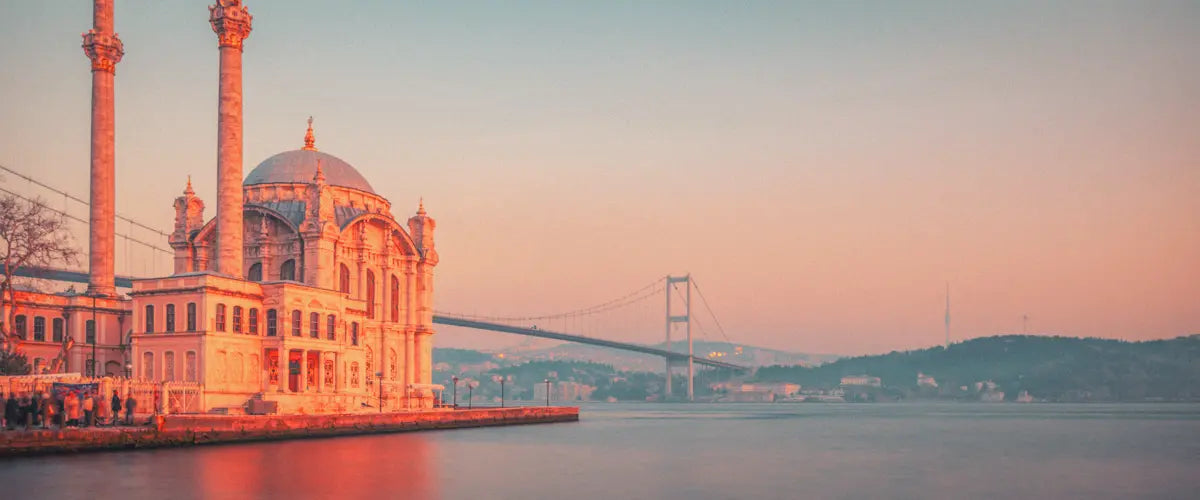
Istanbul is the heart of Turkey and its largest city, famous for its fabulous Grand Bazaar that dates back centuries. Be sure to check out the incredible Hagia Sophia if you're a history lover, the imposing Basilica Cistern, and the traditional hammams for a bathing experience with a difference.
Cappadocia
From hot air balloon flights to tours of the region's old villages and castle ruins, Cappadocia is always a feast for the eyes. The area is replete with traditional buffet dining, marketplaces, and stunning valley walks — one of Turkey's most distinctive and memorable regions.
Pamukkale
Pamukkale — or "the cotton castle" — is an astonishingly photogenic landscape, a UNESCO World Heritage site comprising stunning mineral basins and bright white calcium carbonate. This gives the beauty spot its breathtaking white sheen, with dazzling blue pools scattered throughout. Look up some photos before you go — then check it all out for yourself.
Ephesus
Ephesus is a must-visit for anyone keen on exploring Turkey's history up close. Once an ancient city that, for the most part, is still buried, it's a popular tourist destination during summer, with amazing archaeological sites and findings waiting to be witnessed in person.
Antalya
If you're all about the beach or keen on hiking, you'll want to head to Antalya. While the area is famous for its tourist beach scenes, you can also take your time exploring the Taurus Mountains and discovering some excellent local food haunts as a first-time visitor.
Bodrum
Bodrum is another seaside resort you can explore by boat and on foot — taking in traditional marinas and marketplaces, and dining at quaint cafes along the way. You'd be surprised at how exciting the nightlife gets after hours, too.
Turkey itinerary examples
What you fit into your trip will depend entirely on what you want to prioritise. Here are a few example itineraries depending on how long you're travelling for.
[tip title="Start in Istanbul — it's the classic first-time route"]Many people swear by starting in Istanbul before heading to Cappadocia, then Ephesus and beyond. This is the classic first-timer's route, and what the example itineraries below are based on. It covers the full sweep of Turkey's history, landscape, and coast in a logical, manageable order.[/tip]Turkey itinerary for 7 days
- Days 1–2: Explore Istanbul — book accommodation here as your base.
- Day 3: Day trip to Cappadocia — check out the food and drink, try a hot air balloon ride, and explore the local landscape.
- Day 5: Day trip to Antalya — enjoy the beach and sample the Old Town.
- Day 6: Day trip to Pamukkale.
- Day 7: Finish your trip in Istanbul — it's the biggest city, so it makes sense to spend as much time as possible here.
Turkey itinerary for 10 days
- Days 1–2: Explore Istanbul — book accommodation for two nights.
- Days 3–4: Take a longer trip to Cappadocia — book accommodation for three nights.
- Day 5: Day trip to Pamukkale.
- Days 6–7: Explore and stay in Antalya for three nights.
- Day 8: Day trip to Ephesus's ruins.
- Days 9–10: Finish your trip with a two-night stay in Bodrum.
Turkey itinerary for 14 days
- Days 1–3: Explore Istanbul properly with a three-night break.
- Days 4–6: Take more time to enjoy Cappadocia — three nights, with a day trip to Pamukkale or Ephesus.
- Days 7–9: Enjoy the sands, sun, and mountainscapes of Antalya for three nights, with a day trip to Pamukkale or Ephesus.
- Days 10–12: Spend three nights in Bodrum, taking a day trip to one of the sites above.
- Days 13–14: Book a two-night return stay at your favourite spot from the journey.
Best time to visit Turkey
Many travellers are split on the absolute best time to visit Turkey, though the SIMOVO team recommends heading here in the cooler months of spring or autumn. Crowds are likely to be smaller, and temperatures are much more manageable for a first-time trip.
[tip title="Spring and autumn are the sweet spots"]Spring and autumn give you smaller crowds, lower prices, and more comfortable temperatures for exploring Turkey's historic sites and landscapes. For the best sunbathing opportunities and warm water, summer is excellent — but be prepared for peak tourist numbers and intense heat.[/tip] [warning]Turkey's coastal and inland areas can reach extremely high temperatures in summer — up to 50°C in some regions. If you're travelling in summer, always stay hydrated with bottled water, wear high-SPF sunscreen, and take shelter during the hottest part of the day.[/warning]Practical tips for planning a Turkey itinerary
Here are some final tips on what to include so you make the most of your journey.
[tip title="Keep your first and last days free for travel"]Always keep your first and last days as free as possible for travel connections — don't cram activities into arrival and departure days. Missing a connection because you overloaded day one is one of the most common first-timer mistakes.[/tip] [tip title="Compare flights and accommodation early"]Carefully compare flights and accommodation online for the times of year you'd like to travel. Spring and autumn generally offer the best combination of cost savings and availability — book as far ahead as you can to lock in the best rates.[/tip] [tip title="Plan transport between destinations"]Always plan how you intend to get from one area to another depending on where you're staying and available connections. Domestic flights are often the most practical option for longer distances between Istanbul, Cappadocia, Antalya, and Bodrum.[/tip] [tip title="Immerse yourself in Turkish culture before you go"]Take a look at some fun facts about Turkey before you travel and see if there are any points of interest you'd like to add to your itinerary. Understanding what you're walking into makes the experience far richer from day one.[/tip] [tip title="Allow for jetlag and the heat"]Be ready for jetlag depending on how far you're travelling from, and prepare for the heat — especially if you're visiting from the north and haven't experienced temperatures like Turkey's before. Pack light, breathable layers and stay hydrated throughout.[/tip] [esim flag="🇹🇷" label="Turkey" data="10GB · 30 days" price="£10" href="/products/turkey" benefits="Instant QR setup · Reliable 4G/5G · No contract"]Stay connected across Turkey throughout your entire itinerary[/esim] [faq] [q]How long should I spend in Turkey?[/q] [a]Seven days is the minimum for covering the highlights — Istanbul, Cappadocia, and a coastal stop. Ten days allows for a more relaxed pace with room for Ephesus and Bodrum. Fourteen days is ideal for first-time visitors who want to experience Turkey's full sweep of city, landscape, coast, and history without feeling rushed. However long you go for, keep your first and last days light on scheduled activities.[/a] [q]What is the classic Turkey itinerary route?[/q] [a]The classic first-timer route starts in Istanbul (two to three nights), then heads to Cappadocia (two to three nights for the hot air balloon experience and valley walks), then moves to the coast — Antalya, Bodrum, or both — with day trips to Ephesus and Pamukkale fitted in between. This route covers the main sweep of Turkey's history, landscape, and coastline in a logical order.[/a] [q]What are the must-see places in Turkey?[/q] [a]The six unmissable destinations are Istanbul (Grand Bazaar, Hagia Sophia, hammams), Cappadocia (hot air balloons, cave villages, valley walks), Pamukkale (UNESCO mineral pools), Ephesus (ancient archaeological site), Antalya (beaches and Taurus Mountains), and Bodrum (coastal marina town with nightlife). Most first-time visitors try to cover at least four of these six on a single trip.[/a] [q]When is the best time to visit Turkey?[/q] [a]Spring (April to May) and autumn (September to October) are the best overall times — manageable temperatures, smaller crowds, and generally lower prices than peak summer. Summer is excellent for beaches and warm water but very hot and busy. Winter is the quietest and cheapest period but some coastal resorts and attractions may have reduced hours or be closed.[/a] [q]What is Pamukkale?[/q] [a]Pamukkale — meaning "cotton castle" in Turkish — is a UNESCO World Heritage site in southwestern Turkey, famous for its otherworldly landscape of white calcium carbonate terraces and warm mineral-rich pools. The brilliant white formations contrast with vivid blue pools of thermal water, creating one of the most photogenic natural landscapes in the world. It is typically visited as a day trip from Antalya or Denizli.[/a] [q]Do I need an eSIM for Turkey?[/q] [a]A SIMOVO Turkey eSIM is one of the most practical things to sort before any Turkey itinerary. At £10 for 10GB over 30 days, it activates on landing, connects you to Turkey's best available networks, and keeps you navigating between cities, finding restaurants, and staying connected from Istanbul to Bodrum — without roaming charges when you get home.[/a] [/faq] [esim flag="🇹🇷" label="Turkey" data="10GB · 30 days" price="£10" href="/products/turkey" benefits="Instant QR setup · Reliable 4G/5G · No contract"]Stay connected across Turkey throughout your entire itinerary[/esim]