[takeaways] • France's climate varies hugely by region: an oceanic climate (mild, damp) in the west, Mediterranean heat in the south, and colder continental conditions toward the Alps and the east.
• May and September are generally the best months to visit — mild weather, shorter lines, and lower prices than peak summer.
• Summer (June–August) is hot and crowded, especially along the coast, while fall brings wine harvests, changing foliage, and a real risk of flooding in the south.
• Winter is bitterly cold in the mountains and east, but big cities still draw visitors for their Christmas markets.
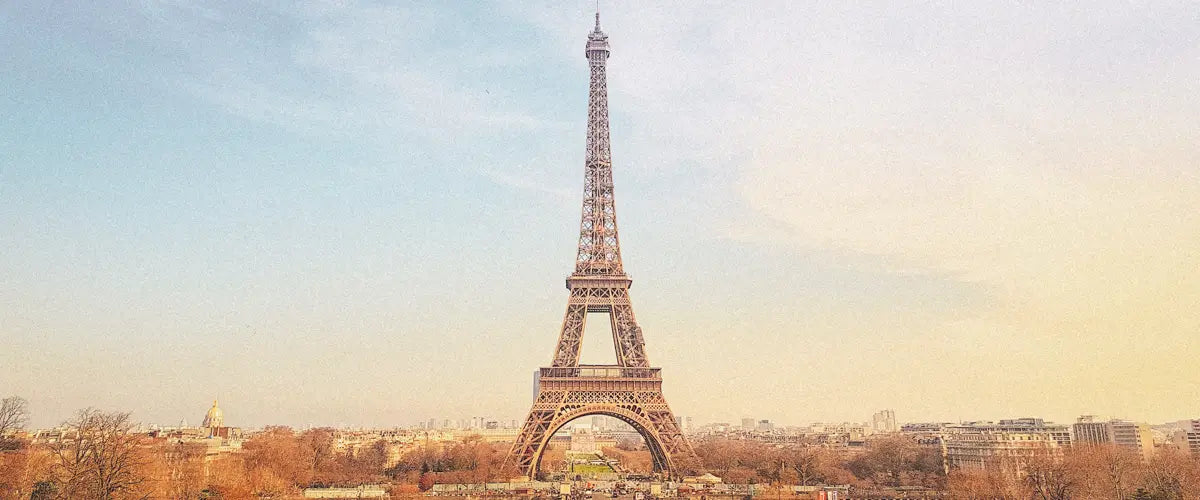
• Don't miss Paris's landmarks — Notre Dame Cathedral, the Eiffel Tower, and the Louvre — and consider the Metro over driving in major cities.
• A France eSIM keeps you connected to maps and translation apps wherever your trip takes you. [/takeaways]
Many people will, rightfully, tell you that there's no one perfect time to visit France. That's not just because the region is so vast, but because there's always something delightful to discover across the country — whether it's in the winter chill or at the height of the European summer. That said, there are a few things to keep in mind when it comes to narrowing down the best time to visit France.
For example, what time of year is likely best if you want to avoid lots of crowds? What if you're traveling to France on a budget and want to save money on flights and hotel rooms?
In this guide, we break down what to expect from France's weather and climate across the seasons, and offer useful travel tips for breaks up and down the country. Before you go ahead and book flights, however, make sure you have a SIMOVO eSIM for France installed so you don't have to worry about running up mobile roaming bills back home.
[esim flag="🇫🇷" label="France" data="10GB · 30 days" price="$9.40" href="/products/france" benefits="Instant QR setup · Reliable 4G/5G · No contract"]Stay connected to maps and translation apps wherever your trip takes you[/esim]
France weather and climate explained
As Campus France states, the climate and weather in France vary wildly across the seasons, but you can generally expect things to be mild unless you visit at the height of summer. Metropolitan France, as the guide backs up, tends to be temperate, but that means you need to plan carefully if you're visiting during winter or summer, for example.
What's more, France is truly vast. The climate in one region, for example, along the Atlantic, will vary compared to what you can expect further inland and to the south. At the Western edge, you can expect an oceanic climate, which means winters are mild but damp, and that rainfall is common throughout the year.
If you're looking for the best weather in France, many people will recommend that you check out the South and along the coast — it's here where temperatures really soar between June and August, but when storms start rattling in across fall and winter.
And then, there's the mountain regions! The Alps and the Pyrenees, for example, are always likely to experience alpine temperatures and heavy rain and snow. That means they're great for winter sports, of course, but if you prefer a more temperate adventure, you're better off sticking to the mainland.
If you're more interested in city breaks than topping up a sun tan on the beach, it may be best to consider heading here during spring or fall. Most attractions in the big cities will stay open for much of the year, but do be prepared for some resorts and accommodations to close for winter.
Crucially, a trip to France means you can pretty much expect a different weather experience based on the season and the region you travel to.
France by season
Given France's size and the sheer range of activities and attractions across the country, consider this a general guide on what to expect while traveling up and down. As with other guides in the SIMOVO Journal, we're basing seasons on how you'd experience them in the Northern Hemisphere. Therefore, spring is March to May, summer is June to August, fall is September to November, and winter is December to February.
[numbered title="France in spring" pill="Mild and blooming"]France during spring likely matches the images you conjure up in your head — it's nice and mild, the flowers are blooming, and it's a great time to explore cities and go hiking across green spaces. Lines for big attractions tend to be manageable this time of year, though while there's sunshine up and down the country, you should certainly prepare for rain and wind, too.[/numbered] [numbered title="France in summer" pill="Hot and crowded"]Summers in France are famously hot depending on where you go, with heatwaves rolling across the south. This makes June through August perfect for French coastal getaways, though if you're particularly sensitive to heat, you'll likely want to take shelter. It's also peak season for tourism, meaning you can expect plenty of crowds and for prices to spike. Believe it or not, it's also reasonable to expect some businesses to close down at the height of the heat.[/numbered] [numbered title="France in fall" pill="Harvest and foliage"]Fall in France is great for wine tourism as it is generally harvest time, and as you might expect, it's also a great opportunity to go walking amid the changing foliage. That said, the weather can get drizzlier between September and October, and toward the south, there is even a risk of flooding in some areas. If you don't mind damp but mild and breezy weather, and still want to explore cities, this is the sweet spot — especially when it comes to a good balance between attraction availability and affordability.[/numbered] [numbered title="France in winter" pill="Cold and festive"]Many areas across France get bitterly cold as the holidays and New Year approach — and this is especially true if you're heading towards the mountainous regions, or toward the east. However, many people choose to visit big cities in France this time of year just to experience the quintessential European Christmas market scenes. Just be prepared for some of the smaller, more remote towns to be closed up through the winter, and for accommodation options to be sparser.[/numbered]
Best months to visit France
The overall best months to visit France, of course, depend on where you're going. That said, we tend to lean toward late spring or early fall, so May or September. During these months, lines are shorter in the bigger cities, weather tends to be mild and pleasant, and prices for flights and hotel rooms are more affordable than you'd expect in the summer.
That said, if you're really set on checking out some Christmas goodies and festive French food, there will still be plenty of opportunities for you to grab flights and book hotel rooms into the winter. Just be prepared for some attractions to be closed down elsewhere!
Travel tips for visiting France
Let's close up our guide with some general tips and recommendations on how to make the most of a trip to France, no matter when or where you're heading.
[tip title="Don't try to see it all in one trip"]Take your time enjoying different regions of France at a time — there's a lot to take in here, north and south. For example, check out our guide to building a South of France itinerary for some ideas.[/tip] [tip title="Don't miss Paris's landmarks"]Paris is regarded as one of the best places to visit in France for its fantastic landmarks alone — it's here where you can take in the Notre Dame Cathedral, the Eiffel Tower, and the Louvre Museum, for example. Check out our guide to Paris, France before you go.[/tip] [tip title="Greet shopkeepers with a bonjour and au revoir"]It's always good practice to greet shopkeepers when you enter and leave shops and stores — a simple bonjour and au revoir will suffice![/tip] [tip title="Don't rush your meal — ask for l'addition when ready"]When dining out in France, don't worry about hurrying along to free up the table — waiting staff here expect you to take time and savor your food, so simply ask for the bill or l'addition when you're ready to leave.[/tip] [tip title="Skip driving in Paris — take the Metro instead"]Where possible, avoid driving in major cities like Paris — taking the local, super-efficient Metro is much more convenient and accessible.[/tip] [faq] [q]What is the best time to visit France?[/q] [a]May and September are generally the best months — mild weather, shorter lines, and lower prices than the peak summer season.[/a] [q]What is the weather like in France in summer?[/q] [a]Summers (June–August) are hot, especially in the south, with heatwaves and peak tourist crowds along the coast. Prices also spike during this period.[/a] [q]Is there a flood risk when visiting France in the fall?[/q] [a]Yes — the south of France can see heavy autumn storms and a real risk of flooding between September and October, alongside drizzlier, breezier weather elsewhere.[/a] [q]What's the weather like in France in winter?[/q] [a]Winters are bitterly cold, especially in the mountains and toward the east, though big cities remain popular for their Christmas markets.[/a] [q]What are the best landmarks to see in Paris?[/q] [a]Notre Dame Cathedral, the Eiffel Tower, and the Louvre Museum are among Paris's must-see landmarks.[/a] [/faq] [esim flag="🇫🇷" label="France" data="10GB · 30 days" price="$9.40" href="/products/france" benefits="Instant QR setup · Reliable 4G/5G · No contract"]Get connected before you explore France[/esim]