[takeaways] • Armenia is widely credited as the first nation to adopt Christianity as a state religion, sometime between 284 and 325 AD.
• The Armenian alphabet, created around 405 AD, originally had 36 letters — two more were added by the 13th century, bringing it to the 38 used today.
• Chess lessons are compulsory in Armenian public schools from age six, taught twice a week by law.
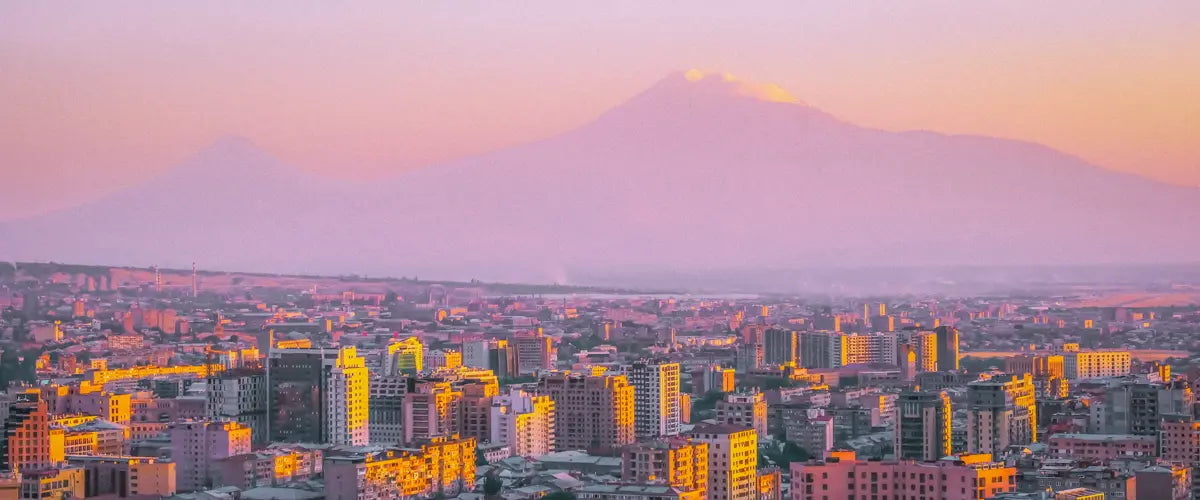
• Mount Ararat is Armenia's national symbol and appears on its coat of arms, even though the mountain itself lies just across the border in modern Turkey.
• The Areni-1 cave holds both the world's oldest known winery (at least 6,100 years old) and the oldest known leather shoe (around 5,500 years old) — older than the Great Pyramid of Giza.
• Yerevan was founded around 782 BC, making it roughly 29 years older than Rome.
• An Armenia eSIM keeps you connected to explore all of this history and nature without hunting for a local SIM. [/takeaways]
If you're planning a break away soon and are setting up your own Armenia itinerary, it makes perfect sense to get to know your destination as much as possible before you fly! As it happens, Armenia's unique culture and location make it one of the most fascinating destinations we've covered in the SIMOVO Journal, and this fun facts guide has been a long time in the making!
Below, we take you through some fun facts about Armenia that might surprise you, and will hopefully inspire you to build some more activities into your itinerary before you set off.
[esim flag="🇦🇲" label="Armenia" data="10GB · 30 days" price="$15.50" href="/products/armenia" benefits="Instant QR setup · Reliable 4G/5G · No contract"]Stay connected to explore Armenia's history and nature without hunting for a local SIM[/esim]
Armenia culture and traditions
Armenia is the first country to have adopted Christianity
Scholars believe that Armenia was the first out of all nations to officially adopt Christianity as its state religion, between 284 and 325 AD. This even predates the Roman Empire's adoption of the faith, and to this day, the Armenian Apostle Church stands as an independent Oriental Orthodox church.
The country has a unique, 38-character alphabet
The Armenian alphabet is also assumed to be one of the oldest on the planet that is still in continuous use. It was reportedly created back in 405 AD by the monk Mesrop Mashtots, originally with 36 letters. Two more were added by the 13th century, bringing the total most commonly used today to 38. The alphabet is also tied with the nation's religious history, and some scholars believe the written language may have been used far earlier than what current records suggest.
Chess is compulsory in Armenian public schools
Chess is more than just a sport in Armenia, it's considered a way of living! So much so, that public primary schools are mandated by law to offer chess lessons. That means, generally, Armenian children from around the age of six are expected to take lessons in the game at least twice a week. It's considered the ultimate game of logic and planning, so why not start early?
Famous landmarks and landscapes in Armenia
Most of Armenia sits above 1,000 meters up
One thing Armenia is famous for is its altitude. It's estimated that around 90% of the country's surface area is around 1,000 meters, or 3,281 feet, above sea level. Even a glance at the region's geography in photos and videos will show you just how mountainous it is — great for hikers and adventurers!
[warning]If heights and altitude are likely to affect you, remember to pack altitude sickness pills and stay hydrated while exploring Armenia's higher ground.[/warning]
Mount Ararat is considered the region's national symbol
The majestic Mount Ararat can be seen from miles around, and it, too, has religious significance. It is considered by many to be the final resting place of Noah's Ark after the Biblical flood took place. It also appears in Armenia's official coat of arms, which includes a depiction of the Ark. Interestingly, the mountain itself actually sits just across the border in modern-day Turkey rather than within Armenia — but that hasn't stopped it from remaining the country's most cherished national symbol.
The Pearl of Armenia is a lake that covers a sixth of the country
The Pearl is just a nickname, which actually refers to the magnificent Lake Sevan, which is around 60 km, or 37 miles, away from the Armenian capital of Yerevan. It is home to multiple species including some native, rare trout, and given that it sits around 1,900 meters, or 6,200 feet, above sea level, it's one of the biggest lakes at this altitude in the region.
Food and drinks Armenia is known for
Armenia's winemaking history is truly ancient
Armenia's place on the winemaking map is well-established thanks to its ancient roots. In fact, it's thought that the earliest known winery on the planet was established here! A cave near Areni village, after exploration, revealed evidence of rudimentary winemaking going back at least 6,100 years.
Lavash is UNESCO-recognized flatbread
UNESCO doesn't just recognize areas of heritage and beauty, but famous food and drink, too. This thin flatbread dish is an Armenian staple, so much so that it's regarded as a cornerstone of the region's cuisine. It's made with wheat flour and water, and served with cheese and meat.
The region's super-famous for its coffee
As much as Armenia has become immensely famous for its wine, its coffee, too, can hold its own. Armenians reportedly started brewing coffee back in the 1700s, under Ottoman rule, and used unique pots to brew drinks that, to this day, are enjoyed by locals and visitors alike.
Surprising historical facts about Armenia
The oldest leather shoe on record is Armenian
Armenia scores another historical record when it comes to footwear, as the "Areni-1 shoe", a shoe made from ancient cowhide, was discovered in the region. Experts dated the shoe to be as old as 5,500 years — making it older than the Great Pyramid of Giza!
Armenia's capital is older than Rome
The ancient facts keep coming, as, yes, Yerevan is technically older than the Roman Empire and the Italian capital itself. Yerevan was established in around 782 BC, some 29-30 years before Rome was first established. It's not much of an age gap, but it still counts!
Carahunge is said by some to be older than Stonehenge
And, let's not stop there. Carahunge is an immense structure of more than 220 basalt stones arranged in circles and rows. Mainstream archaeologists generally date the site to the Middle Bronze Age through Iron Age, but a more speculative theory — proposed by Armenian physicist Paris Herouni — suggests it may have functioned as an ancient observatory dating back as far as 5,500 BC. If that older date were accurate, it would make Carahunge older than the UK's own Stonehenge, though most scholars treat this as an intriguing theory rather than settled fact.
Wildlife, geography, and nature in Armenia
It's home to the critically endangered Persian leopard
Of all the fascinating species that call Armenia home, the Persian leopard is one of the most interesting. This critically endangered beast may be found mostly in and around Iran, but there are rare sightings toward south Armenia, with many choosing to roam protected refuges and reserves.
There are more than 360 species of bird in Armenia
The jury is out on exactly how many different bird species reside in Armenia, but it's certainly more than 350. This is largely thanks to the fact Armenia sits at an intersection of several major migratory routes and flyways. It's an absolute delight for birdwatchers, especially those who want to see rare, native species up close.
Armenia is home to one of the highest concentrations of plant life on the planet
Armenia's biodiversity is truly staggering — it's host to forests, semideserts, wetlands, and more. This is particularly interesting because it is apparently home to 32 Important Plant Areas, meaning protected zones where important plant life grows and thrives. It's noted that around 452 species of plant live and grow in Armenia alone, which might not sound like many on a comparative scale, but it is when you consider the country's size and condensed biodiversity!
Why travelers find Armenia memorable
Armenia is a curious vacation destination that appeals to many thanks to its ancient charms and relatively untouched landscapes. It's absolutely a prime destination for history lovers and nature fans alike.
[faq] [q]Was Armenia really the first country to adopt Christianity?[/q] [a]Yes — scholars widely credit Armenia as the first nation to adopt Christianity as its official state religion, sometime between 284 and 325 AD, predating the Roman Empire's adoption of the faith.[/a] [q]Is Mount Ararat actually in Armenia?[/q] [a]No — despite being Armenia's national symbol and appearing on its coat of arms, Mount Ararat itself lies just across the border in modern-day Turkey.[/a] [q]Is Carahunge really older than Stonehenge?[/q] [a]It's disputed. Mainstream archaeologists date the site to the Middle Bronze Age through Iron Age, but a more speculative theory suggests it could date back to 5,500 BC, which would make it older than Stonehenge. Most scholars treat the older date as unproven.[/a] [q]What is Armenia famous for historically?[/q] [a]Armenia is home to the world's oldest known winery (at least 6,100 years old), the oldest known leather shoe (around 5,500 years old), and a capital city, Yerevan, that's roughly 29 years older than Rome.[/a] [q]How many letters are in the Armenian alphabet?[/q] [a]The alphabet was created in 405 AD with 36 letters. Two more were added by the 13th century, bringing the total most commonly used today to 38.[/a] [/faq] [esim flag="🇦🇲" label="Armenia" data="10GB · 30 days" price="$15.50" href="/products/armenia" benefits="Instant QR setup · Reliable 4G/5G · No contract"]Get connected before you land in Armenia[/esim]