[takeaways] • The 2026 Tour de France covered 2,071 miles (3,333 km) across 21 stages and 2 rest days.
• The race ran for 23 days, from July 4 to July 26.
• The 2026 route started in Barcelona, Spain, and finished in Paris; the 2027 Grand Départ moves to the United Kingdom.
• Riders still sleep during the race — usually around seven hours a night, plus strategic naps on the team bus.
• Exact dates shift every year, but the race always falls across three weeks in July.
• A France eSIM keeps you connected to follow the action and get around, wherever the stages take you. [/takeaways]
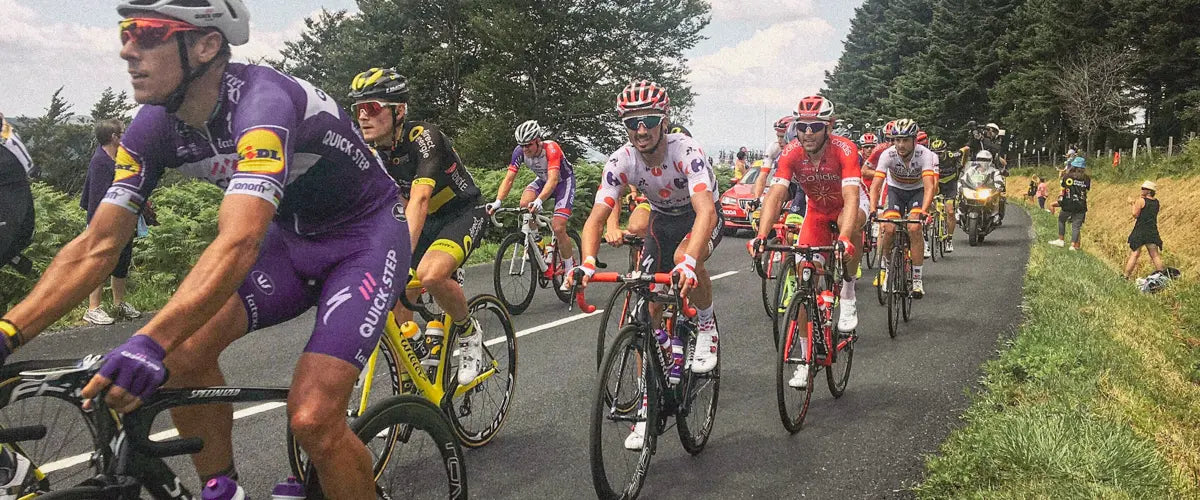
France is world-famous for all kinds of fabulous things — its history, its food and wine, its beaches — but millions of people know the region best for the biggest cycle race in the world. The Tour de France is a yearly contest putting the best cyclists in the world through their paces in a strenuous test of their talent and endurance. And there are plenty of ways to get out and watch the action as it unfolds!
In this guide, we'll break down how long the Tour de France takes, what the total distance covered is, and when it takes place. We'll answer a couple of common questions, too, and offer some top tips on how to make the most of a trip out to France to watch the wheels roll.
[esim flag="🇫🇷" label="France" data="10GB · 30 days" price="$9.40" href="/products/france" benefits="Instant QR setup · Reliable 4G/5G · No contract"]Stay connected to follow the action, wherever the stages take you[/esim]
What is the total distance of the Tour de France?
The total distance that cyclists cover in the Tour de France has changed a lot over the years, but as of the 2026 race just gone, they needed to endure a blistering 2,071 miles, which is around 3,333 km! That's split over several days and stages, of course — cyclists aren't expected to ride endlessly!
In 2026, the race actually started in Spain, in Barcelona. Riders traveled from there on to Tarragona, Granollers, Pau, Bordeaux, Aurillac, Vichy, Belfort, Voiron, and others, before finishing in a flat race in Paris.
How long does the Tour de France take?
Again, the stages and length of the race, total, have changed over the years, but based on the 2026 competition, cyclists traversed thousands of miles across 23 days, running from July 4th to July 26th. There are two rest days.
This was split over 21 different stages, with many covering more than 100 miles at each point — with a stage covered each day. Some stages were classified as hilly, while others were considered flat or even mountainous! Therefore, anyone taking part in the race is expected to be an excellent endurance rider across all terrains and conditions.
Domestique Cycling offers a fantastic guide to how the 2026 Tour de France broke down, so be sure to read it in full before you set off.
Where does the Tour de France take place?
The short, silly answer is France — but, as mentioned, it actually started in Barcelona, Spain, in 2026. The race typically covers multiple French regions and departments, across towns and mountain regions for variety and challenge. In 2026, the race finished, appropriately, in the French capital of Paris.
In 2027, the race is actually set to start in the United Kingdom! The UK has hosted its own twist on the competition, too, known as the Tour de Yorkshire. The race ran from 2015 to 2019, before being postponed in 2020 and 2021 because of the COVID-19 pandemic, and then formally cancelled in 2022 after organizer Welcome to Yorkshire entered administration. It has never been restaged since.
Do riders ever sleep during the Tour de France?
Yes, riders certainly sleep during the Tour de France, even though they are running on tight and physically demanding schedules. Generally, riders aim to get an average of seven hours a night, as is healthy, but many athletes will also choose to nap strategically on the team bus.
As sleep quality is so important during the race, many riders choose to bring their own sleep aids with them on tour, such as sleep masks — and some even sleep outside if the weather is too uncomfortable. If they don't get enough quality sleep, they risk not being ready to take on the next day's big challenge.
When does the Tour de France take place?
The exact dates of the Tour de France change every year, but the rule of thumb is the race takes place across three weeks in July. It's worth checking the latest dates a few months before you're due to travel so you can take in all of the action.
What are the best ways to watch the Tour de France in person?
Many Tour de France fans enjoy watching the starts of each stage so they can see teams and riders set up and present, and get a view of who's taking part before they set off. Otherwise, people head up to the mountain stages for the most gruelling but often slowest-paced action.
Then, there are the finish lines — where there's big glory in store. However, getting spots at the finish lines requires plenty of planning ahead of time, as there will always be large crowds. Therefore, it's a good idea to pack and arrive early. If you're heading up to watch mountain stages, take bottled water and food with you to make sure you have enough provisions.
Quick travel tips for France
Regardless of whether you're heading to France for cycling or for a general vacation, there are always some tips to keep in mind so your trip is as enjoyable as possible. Here are just a few worth taking note of before you book any flights or accommodations.
[tip title="US visitors usually don't need a visa"]If you're traveling from the US, you normally won't have to get a visa for France unless you're staying here for an extended period. Check out our complete guide linked for more details.[/tip] [tip title="Brush up on fun facts about France"]Top up on some of our fun facts about France before you travel so you can dive into some cultural and historical tidbits![/tip] [tip title="Greet shopkeepers as you come and go"]When entering and leaving shops and stores, always make sure you greet the shopkeeper. Greet with "Bonjour" or "Bonsoir", and leave with "Au Revoir". Learning and using some French during your visit will go a long way to show that you respect local people, so get stuck into your phrasebook before you go![/tip] [tip title="Take your time over meals"]Don't ever feel rushed to finish meals while dining out in France. Waiters and servers don't rush people who are enjoying dinner — meaning you can take your time and pay the bill when you want to (provided that you do so, of course!).[/tip] [tip title="Tipping isn't a must"]You don't have to leave huge tips when dining out in France, and in some circumstances, it's included in your final bill.[/tip] [tip title="Book transport well in advance"]Always book transport across the country, for example, if you're heading to the Tour de France, as far in advance as you can — doing so will save you money, and in some cases, you'll need to book in advance to ride at all.[/tip] [faq] [q]How long is the Tour de France?[/q] [a]The 2026 Tour de France covered 2,071 miles (around 3,333 km) across 23 days and 21 stages, with two rest days.[/a] [q]When does the Tour de France take place?[/q] [a]Exact dates shift each year, but the race always runs across three weeks in July. The 2026 edition ran from July 4th to July 26th.[/a] [q]Where does the Tour de France start and finish?[/q] [a]The race doesn't always start in France — the 2026 edition began in Barcelona, Spain, before finishing in Paris. The 2027 race is set to start in the United Kingdom.[/a] [q]Do Tour de France riders sleep during the race?[/q] [a]Yes — riders aim for around seven hours a night, often supplemented with strategic naps on the team bus, since recovery is critical to performing the next day.[/a] [q]What's the best way to watch the Tour de France in person?[/q] [a]Stage starts, mountain climbs, and finish lines all offer a different experience. Finish lines draw the biggest crowds, so arrive early if you want a good spot.[/a] [/faq] [esim flag="🇫🇷" label="France" data="10GB · 30 days" price="$9.40" href="/products/france" benefits="Instant QR setup · Reliable 4G/5G · No contract"]Get connected before you land in France[/esim]