[takeaways] • Guatemala has 37 volcanic peaks — three of them (Santiaguito, Pacaya, and Fuego) are currently active.
• Tikal National Park is a UNESCO World Heritage Site — home to ancient Mayan temple and palace ruins surrounded by extraordinary wildlife.
• The ancient Maya are credited as the originators of chocolate — originally consumed as a drink rather than in solid form.
• Lake Atitlán, the deepest lake in Central America at over 340 metres, was formed around 84,000 years ago by a massive volcanic eruption.
• Guatemala is home to at least 22 Mayan languages alongside Spanish — K'iche', Q'eqchi', and Kaqchikel are each spoken by more than a million people. [/takeaways]
Guatemala is one of Central America's most extraordinary destinations — birthplace of the ancient Mayan civilization, home to active volcanoes, sacred lakes, and a living culture that spans millennia. Here are 13 facts about Guatemala that might just move it to the top of your travel list.
[esim flag="🇬🇹" label="Guatemala" data="5GB · 30 days" price="$16.20" href="/products/guatemala" benefits="Instant QR setup · Reliable 4G coverage · No roaming charges"]Stay connected across Guatemala — prepaid, reliable, no surprises[/esim]1. Coffee is one of Guatemala's most important exports
Central America is one of the world's great coffee-producing regions, and Guatemala sits just outside the global top ten exporters. The country's coffee industry dates back to the 1800s and currently accounts for at least 40% of Guatemala's agricultural export revenue. Hard bean Guatemalan coffee has devoted fans worldwide who consider it among the finest produced anywhere.
2. Guatemala has more than 30 volcanoes — three of them active
Guatemala sits on one of the most volcanically active stretches of the Pacific Ring of Fire, with 37 volcanic peaks across the country. Three — Santiaguito, Pacaya, and Fuego — are currently active.
[warning]Santiaguito, Pacaya, and Fuego are active volcanoes and are not always safe for hiking. Pacaya is the most accessible and most commonly trekked by visitors, but conditions change — always check current activity levels and official guidance from Guatemala's National Institute of Seismology, Volcanology, Meteorology and Hydrology (INSIVUMEH) before attempting any volcano hike. Never approach active eruption zones.[/warning]
3. Guatemala has 360 microclimates and over 16,000 species
From plains and plateaus to forests, meadows, deserts, swamps, and mountains, Guatemala is an extraordinary melting pot of ecosystems. The country hosts an estimated 360 distinct microclimates and more than 16,000 animal, insect, and plant species — at least 13% of which are endemic to Guatemala alone.
4. Guatemala literally means "the place of many trees"
The country's name is believed to derive from Cuauhtēmallān — a Nahuatl word translating approximately as "the place of many trees." An extended interpretation of the name goes further still: "A spring that, like blood, throws forth bitumen with which they unite in their sorrow." The name Guatemala wasn't recorded in written English until at least the 16th century.
5. Tikal is a UNESCO World Heritage Site of global importance
Tikal National Park is one of the Americas' most significant archaeological and natural sites — home to the ruins of an ancient Mayan city including extraordinary temples and palaces, alongside a rich ecosystem of plants and wildlife. Its UNESCO World Heritage status reflects both its cultural and natural significance.
6. Guatemala is the most populated nation in Central America
Despite its vast natural landscapes, Guatemala is by far the most populous country in Central America — with an estimated 17.85 million people in 2024. That's more than seven million more than Honduras, which ranks second in the region.
7. The ancient Maya are credited with creating chocolate
Guatemala is regarded as the birthplace of chocolate — with the ancient Maya, who lived in areas including Tikal, believed to be the first people to cultivate cacao and develop it into a consumable product. They called it the "food of the gods." Crucially, cacao was primarily consumed as a drink rather than in solid form — meaning a rudimentary version of chocolate milk predates the chocolate bar by centuries.
8. Lake Atitlán was created by a massive volcanic eruption
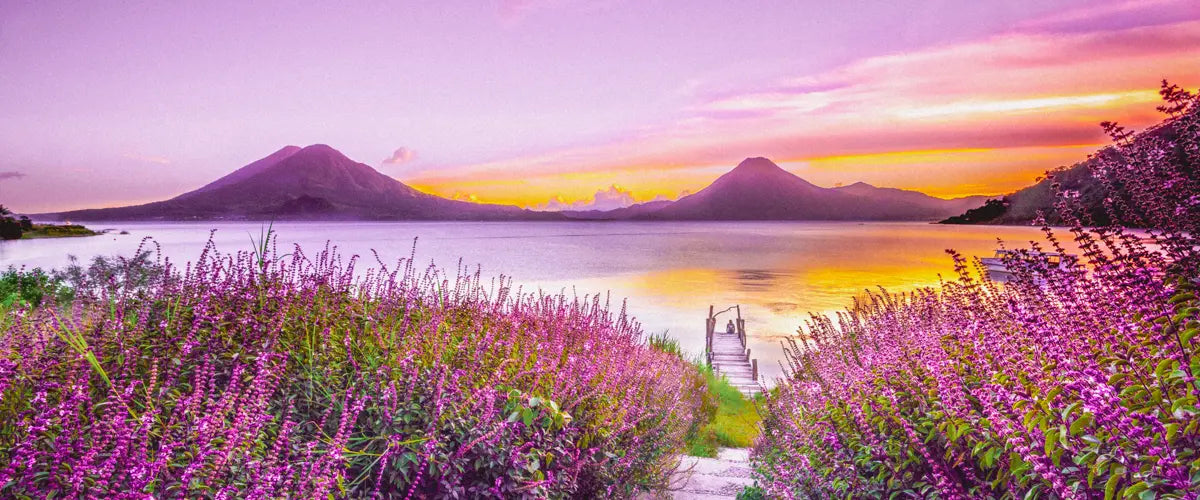
Around 84,000 years ago, an immense volcanic eruption formed what is now Lake Atitlán — one of Guatemala's most celebrated natural landmarks. Since its formation, the lake has been a home and spiritual center for multiple peoples including ancient Mayan tribes, and it remains a destination of deep cultural and spiritual significance today.
[tip title="Lake Atitlán holds profound spiritual significance — approach respectfully"]Lake Atitlán is not only a natural wonder but a place of ongoing cultural and spiritual importance to local indigenous communities. If you're visiting the lakeside villages, always show respect for local customs, ask before taking photographs of people or ceremonies, and engage with any guided cultural experiences on offer to gain genuine understanding of the area's significance.[/tip]
9. Lake Atitlán is the deepest lake in Central America
Beyond its history, Lake Atitlán is remarkable in scale — measured at more than 340 metres deep, making it easily the deepest lake across the entire Central American region. The full depth of the lake floor has never been comprehensively charted.
10. Guatemalan cuisine blends ancient Maya and Spanish influences
Guatemala's food culture is a rich fusion of ancient Mayan and Spanish culinary traditions — stews, tamales, soups, and snacks built around beans, corn, peppers, locally-reared meat, vegetables, and fresh herbs. It's genuinely distinctive Central American cooking worth discovering before you arrive. Traditional Guatemalan recipes are a great starting point.
11. Guatemala is famous for its handwoven textiles
Guatemala's textile tradition spans centuries — handwoven clothing and goods in kaleidoscopic colors and patterns are a fixture of traditional markets across the country. These are not mass-produced imports but genuine handcraft with deep cultural roots, and they deserve to be seen in person rather than through a photograph.
12. More than 22 Mayan languages are spoken across Guatemala
While Spanish is Guatemala's official language, the country is home to at least 22 Mayan languages alongside Xinca and Garífuna. K'iche' is the most widely spoken, with Q'eqchi' and Kaqchikel each spoken by more than a million people. The Translators Without Borders interactive map is a fascinating way to explore the regional distribution of these languages.
13. Giant kites guide the souls of the dead home on All Saints Day
Guatemalan tradition holds that the souls of the departed may return to the land of the living for up to 24 hours each year. On November 1st — All Saints Day — communities fly enormous, elaborately decorated kites to guide souls back to their living relatives, attaching messages for those who have passed. The festival is known as La Feria de Barriletes Gigantes, and the kites created are genuinely spectacular works of community craft.
[tip title="La Feria de Barriletes Gigantes is worth planning your trip around"]If your Guatemala trip falls anywhere near November 1st, La Feria de Barriletes Gigantes — held primarily in the town of Santiago Sacatepéquez — is one of the most visually extraordinary and culturally meaningful festivals in Central America. The kites can reach several metres in diameter. Book accommodation in the area well in advance as this event draws significant visitor numbers.[/tip] [faq] [q]What is Guatemala famous for?[/q] [a]Guatemala is famous as the birthplace of the ancient Mayan civilization and home to extraordinary archaeological sites including Tikal National Park (UNESCO World Heritage Site). It is also known for its 37 volcanic peaks (three active), Lake Atitlán — the deepest lake in Central America — rich indigenous textile traditions, over 22 living Mayan languages, world-class coffee production, and the spectacular La Feria de Barriletes Gigantes kite festival on November 1st.[/a] [q]Is it safe to hike Guatemala's volcanoes?[/q] [a]Several of Guatemala's volcanoes — particularly Pacaya — are popular hiking destinations and accessible for visitors. However, three volcanoes (Santiaguito, Pacaya, and Fuego) are currently active. Always check current activity levels from INSIVUMEH (Guatemala's official volcanological authority) before hiking any volcano, and never approach active eruption zones. Going with an experienced local guide is strongly recommended.[/a] [q]What is Tikal?[/q] [a]Tikal is an ancient Mayan city located in the Petén jungle of northern Guatemala — one of the most significant Mayan archaeological sites in the world and a UNESCO World Heritage Site. The site includes extraordinary temple and palace ruins rising above the jungle canopy, alongside a rich ecosystem of wildlife. Tikal is best visited early in the morning when wildlife is most active and visitor numbers are lower.[/a] [q]What is La Feria de Barriletes Gigantes?[/q] [a]La Feria de Barriletes Gigantes is a traditional Guatemalan festival held on November 1st (All Saints Day) — primarily in the town of Santiago Sacatepéquez. Based on the belief that the souls of the departed can return to the living for 24 hours each year, communities create giant, elaborately decorated kites — often several metres in diameter — to guide the souls of loved ones home. It is one of the most visually extraordinary cultural festivals in Central America.[/a] [q]What languages are spoken in Guatemala?[/q] [a]Spanish is Guatemala's official language, but the country is genuinely multilingual — home to at least 22 Mayan languages alongside Xinca and Garífuna. K'iche' is the most widely spoken Mayan language, with Q'eqchi' and Kaqchikel each spoken by more than a million people. In rural and indigenous communities, Spanish may not be the primary language — some basic Spanish and awareness of local linguistic diversity is always valuable for visitors.[/a] [q]Do I need an eSIM for Guatemala?[/q] [a]A SIMOVO Guatemala eSIM is one of the most practical additions to any Guatemala trip. At $16.20 for 5GB over 30 days (most popular plan), it keeps you navigating to Tikal, finding your way around Lake Atitlán, and staying in touch throughout your visit — without roaming charges or WiFi dependency in areas where public connectivity may be limited.[/a] [/faq] [esim flag="🇬🇹" label="Guatemala" data="5GB · 30 days" price="$16.20" href="/products/guatemala" benefits="Instant QR setup · Reliable 4G coverage · No roaming charges"]Stay connected across Guatemala — prepaid, reliable, no surprises[/esim]