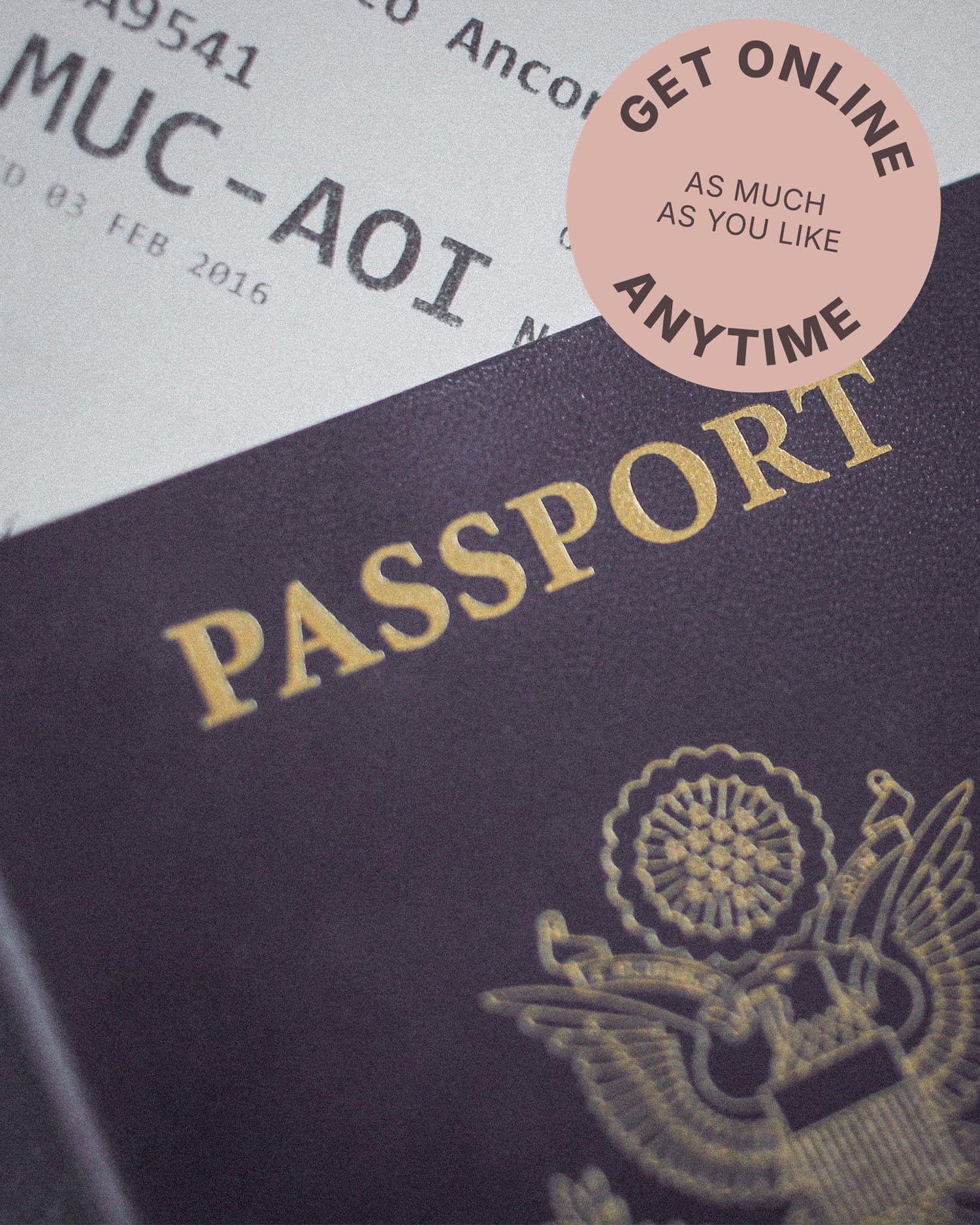
When you're travelling a long distance between destinations, or between different airlines, you might need to take a layover flight. That means taking a pause on route for up to 24 hours before you change planes.
But, how does a layover flight work in practice? What about stopover flights? What happens with customs, and where should you stay before your next connection?
In this guide, we'll take you through everything you need to know about layovers, stopovers, and what's expected from you during your journey's pause.
Layover flight definition
A layover flight is a short pause on longer or non-direct plane journeys. It essentially means you need to change planes on route — you'll have to make a connecting flight so you can reach your destination.
For example, if you are travelling from London to Johannesburg, you may need to book a layover flight that pauses your journey in, say, Rome or Cairo. Either way, you'll need to grab an eSIM for Africa and be ready to stop a little while before you move on again.
Generally, the term "layover" is used to describe intermittent breaks in flights that last for up to 24 hours. In many cases, these breaks are much shorter. And, you usually won't have to go through the customs process again if you stay on-site at your connecting airport.
We all love a direct flight, but sometimes, it's just not possible. Layovers can mean taking extra time out of your schedule or even delaying when you arrive at the other end.
That said, UK Department for Transport research from a few years ago suggests that around 13% of business travellers heading abroad made one or more connecting flights on average. While layover flights may not always be convenient, they are frequently more affordable than direct flights.
Booking a layover is like taking an intermission between flights. In many cases, you'll have the opportunity to explore an airport lounge's facilities, with many major ports offering entertainment and sleeping pods.
If you're on layover in France or Switzerland, for example, it might be a great opportunity to use a SIMOVO eSIM for Europe to catch up on some streaming!
[esim flag="🇪🇺" label="Europe" data="1GB · 7 days" price="£3" href="/products/europe" benefits="Instant QR setup · Reliable 4G/5G · No contract"]Stay connected during your European layover[/esim]Stopover flight explained
Stopover flights are usually much longer than layovers and allow you to book accommodation to sleep before your connection takes off. This will usually be the case if, say, you have a layover of 24 hours, though what services are available to you will depend on the airline you book with.
Stopovers tend to be more expensive because they're usually charged additionally to typical flights. It does, at least, mean you can leave the airport and explore the local area for a while, though that comes with a caveat of having to go through customs again.
And, with immigration and customs wait times into the US, for example, likely to be anywhere between five and 32 minutes, it's an extra hassle you'll need to plan into your day.
What's also worth keeping in mind is your eSIM. If you purchase an eSIM for the Middle East but have a stopover further east into Asia, you may not be covered for data during the break — unless you're on a global package.
[tip title="Cover every stop"]If you know exactly where you're stopping over and would prefer not to get a global eSIM, you'll need to purchase and load an eSIM for Asia too. SIMOVO eSIMs activate as soon as you land in a designated country or region.[/tip]Key differences between layovers and stopovers
Now you know the basic definitions of layover and stopover flights, here's a quick comparison of the key differences between them.
| Layover Flight | Stopover Flight | |
|---|---|---|
| Duration | Usually up to 24 hours | Usually over 24 hours |
| Baggage Handling | Checks through to your next flight (can vary depending on jurisdictions) | Needs to be collected and re-checked for the next connection |
| Cost | Competitive compared to some direct flights | May be expensive due to ticket separation |
| Tickets | Typically covered under one ticket | Normally requires multiple tickets purchased at point of sale |
| Customs | One check-in for the whole journey | You'll need to repeat check-in and customs at your connecting airport |
| What You Can Do | Explore the airport and its facilities | Explore the local area |
What to do during a flight layover
Flight layovers can give you a chance to explore either local facilities or the wider area, rest, catch up on movies or shows, or even work if you're on business time. You could:
- Use airport lounges with shower facilities to freshen up.
- Rest in a sleeping pod.
- Work on your laptop while waiting for your connection — for example, if your layover is in Brazil, use an eSIM for South America for maximum security.
- Go shopping in airport lounges with malls attached.
- Catch a film at an airport with a cinema or theatre.
- Take a walk or two to get your blood flowing and combat DVT.
- Explore the local city and book into a hotel if you're on a stopover.
- Relax and catch up on streaming with an eSIM with unlimited data — don't always trust public WiFi!
Common types of layover flights
You'll typically find there are three types of layover flights:
- International — your starting point, layover, or final destination is based overseas. This usually means you'll need to pass through customs.
- Domestic — all flights take place within your home country. You won't normally need to go through customs.
- Self-transfer — you book two separate flights and manage your own connections. You have more control, but you're likely to go through baggage and customs checks more than once.
Important things to consider when booking layover flights
While we've made it sound relatively simple to arrange layover and stopover flights, there are still a few important points to consider before you book and fly.
[warning]Always check visa requirements for every country your journey passes through — not just your final destination. Even for short layovers or stopovers, you may need official entry documentation. Requirements vary significantly by nationality and destination.[/warning]- Always ensure you have enough time to comfortably make your connections and pass through customs.
- Keep plenty of clothing, medications, and toiletries you need on hand in your carry-on.
- Make sure you have an eSIM to cover you for the data you'll use while on break — for example, if you're travelling to Australia, an eSIM for Oceania means your internet use is already paid for before you land.
- Check the flight policies of each connection — what you can carry on may differ from flight to flight.
Layovers and stopovers don't have to be a hassle! Provided you have your data covered before you go — for example, with an eSIM for North America if you're visiting Canada — you'll have plenty of time to keep yourself entertained.
[faq] [q]What is the difference between a layover and a stopover?[/q] [a]A layover is a connection break of up to 24 hours, typically covered under one ticket, where your baggage usually transfers automatically. A stopover lasts longer than 24 hours, normally requires separate tickets, and means collecting your baggage and going through customs again at the connecting airport.[/a] [q]Do I need a visa for a layover?[/q] [a]It depends on your nationality and the country you are stopping in. Some countries require a transit visa even for short layovers where you do not leave the airport. Always check the entry requirements for every country your itinerary passes through — not just your final destination.[/a] [q]Will my baggage be transferred automatically on a layover?[/q] [a]On most layover flights booked under a single ticket, your baggage will be checked through to your final destination automatically. However, this can vary depending on the airlines involved and the countries you are travelling between. Always confirm baggage handling with your airline when booking.[/a] [q]How long should a layover be to make my connection comfortably?[/q] [a]As a general rule, allow at least 60 to 90 minutes for a domestic connection and at least two hours for an international connection. At larger or busier airports, allow more. If your first flight is delayed, a tight connection window can mean missing your onward flight entirely.[/a] [q]Can I leave the airport during a layover?[/q] [a]On a short layover (under 24 hours), leaving the airport is not usually recommended unless you have plenty of time and know the airport well. On a stopover (over 24 hours), leaving to explore the local area is part of the appeal — though you will need to go through customs and back again, which adds time.[/a] [q]Do I need a separate eSIM for each country I stop in?[/q] [a]If your stopover country is in a different region to your destination, you may not be covered by your existing eSIM plan. Check the coverage of your SIMOVO eSIM before you fly. If you are stopping in a different region, you can load a second eSIM for that area, or opt for a global unlimited plan that covers you throughout your entire journey.[/a] [/faq] [esim flag="🌍" label="Travel eSIM" data="Unlimited · resets daily" price="From £3" href="/collections/unlimited-plans" benefits="Instant QR setup · Global coverage · No contract"]Stay connected at every stop with a SIMOVO unlimited eSIM[/esim]