[takeaways] • The four best places to visit in South Korea are Seoul, Busan, Jeju Island, and Gyeongju.
• Seven to 14 days is the sweet spot — Seoul alone can fill three to five days, and that's before you've left the capital.
• Spring is the best time to visit — manageable weather and the famous cherry blossom season at its peak in April.
• Summer (June to August) is very humid in South Korea — if heat and humidity are a concern, plan your trip around spring or autumn instead.
• Seoul and Busan are connected by high-speed KTX train — one of the most efficient and enjoyable rail journeys in Asia. [/takeaways]
Relatively small but absolutely packed with culture, gorgeous landscapes, and delicious food, South Korea has very quickly become a must-see destination for travelers all over the world. The heart of most visits will be the capital, Seoul — but those of us who have been to Korea a few times will tell you it's worth building a proper itinerary to get to know the country at its best.
Like our other itinerary guides, we've collected great ideas you might want to build into your own trip — with no set rules on what you see, when, or how. The one thing we always recommend is grabbing an eSIM for South Korea before you travel, to cut back on data roaming costs and avoid hunting for WiFi spots.
South Korea itinerary overview
If there's one thing most itinerary planners agree on, it's that you should absolutely start in Seoul and make the trip down to Busan and back via high-speed public transit. Even that two-stop trip, if you're going for two weeks, will leave you with more to see and do than you can comfortably fit in.
Beyond Seoul and Busan, we've lined up a few other destinations worth tracking down in the wider country — the best South Korea itinerary combines the best of its cityscapes and its natural beauty, and you can absolutely do both.
[tip title="Seven to 14 days is the sweet spot for South Korea"]Most experienced Korea travelers agree that between seven and 14 days is the ideal length of stay for seeing the best of the country. Anything under a week is unlikely to give you enough time to take in the culture, shrines, street food, and coastlines. Seoul alone will keep your timetable full for several days.[/tip] [tip title="Plan around shopping in Korea"]We recommend planning around shopping in Korea — whether you choose ultra-modern mall scenes or traditional market stalls, there's likely to be plenty you'll want to bring home. Factor in time and luggage capacity before you travel.[/tip]
Best places to visit in South Korea
SIMOVO's South Korea travelers were pretty unanimous in agreeing that Seoul and Busan are non-negotiable must-visits. Beyond those, Jeju Island and Gyeongju round out a four-destination itinerary that covers the full range of what South Korea has to offer.
[numbered title="Seoul" pill="The unmissable capital"]Night markets, traditional villages, stunning palaces, and world-famous cafe and street food culture — Seoul is a destination that doesn't let up and could fill an entire trip on its own.[/numbered] [numbered title="Busan" pill="Coastal city and temples"]Korea's second city — beach scenery, vibrant villages, seafront temples, and a slightly different pace to Seoul. No Korea trip is complete without including both.[/numbered] [numbered title="Jeju Island" pill="Volcanic island escape"]A volcanic island paradise easily accessed by flight from Seoul or Busan — beach walks, hiking, watersports, and a genuinely relaxing contrast to the mainland's cities.[/numbered] [numbered title="Gyeongju" pill="Korea's open-air museum"]One of Korea's most important historic cities — home to the UNESCO-recognized Bulguksa Temple, ancient archaeological sites, and a peaceful, unhurried atmosphere.[/numbered]
Seoul
South Korea's capital is likely where you'll touch down first — and it's an absolute must-see. From night markets and traditional villages to stunning palaces and world-famous cafe culture, Seoul is a destination that doesn't let up. You could fill a full week just by exploring the capital.
Trendy shopping precincts, galleries, museums, restaurants, and street food scenes all make strong arguments for Seoul as your itinerary base. We absolutely recommend sticking with Seoul for the best in Korean food — the city's culinary scene is genuinely world-class.
Busan
Busan is usually the second city on most Korea travelers' lips after Seoul. This delightful coastal metropolis may not be as big or as flashy as the capital, but its villages, beach scenery, temples, and vibrant street scenes offer a distinctly different experience. Most itinerary builders agree that no trip to Korea is complete without including both.
[tip title="Seoul to Busan by KTX takes less than three hours"]The KTX high-speed train connects Seoul and Busan in under three hours — one of the most efficient and enjoyable rail journeys in Asia. You can base yourself in either city and explore the wider country from there, or switch bases mid-trip without much hassle.[/tip]
Jeju Island
Head a little further from the peninsula and you'll find Jeju Island — a genuinely relaxing break from the energy of Seoul and even the gentler pace of Busan. Easy to access by flight from either of the main cities, Jeju is well-loved by hikers, watersports fans, and those simply looking to unwind by the coast. A beautiful little volcanic paradise tucked away from the bright lights.
Gyeongju
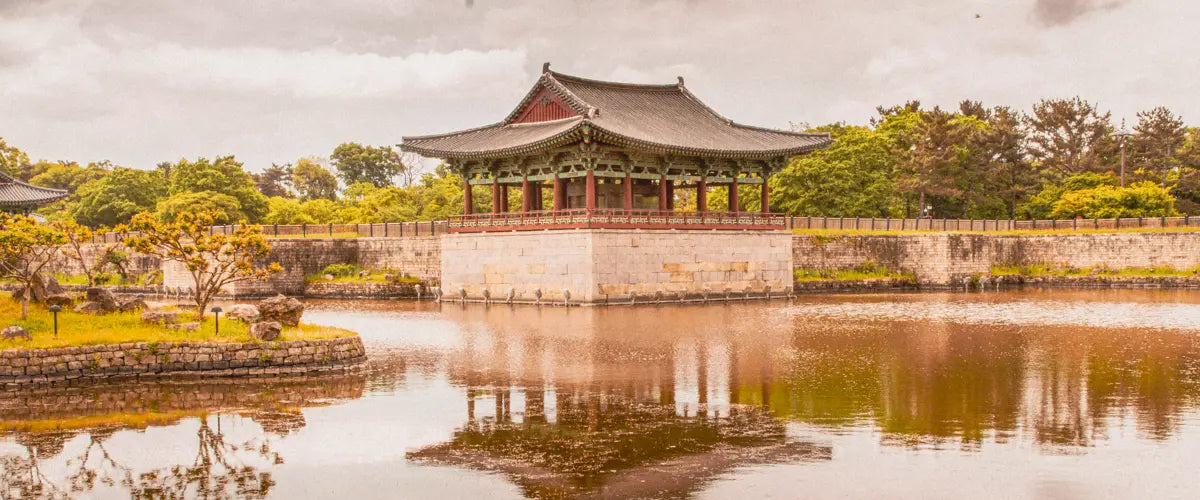
Gyeongju is a must-see for anyone keen to take in Korea's historic roots — some refer to it as the country's open-air museum. It's home to the UNESCO-recognized Bulguksa Temple and a peaceful wander across ancient archaeological sites that give a genuine sense of Korea's long history. Accommodation options exist throughout the area, so it works equally well as a day trip or an overnight stop.
South Korea itineraries based on trip length
Here are three example South Korea itineraries based around the four best places to visit. Mix them up however you wish — we've arranged them based on accessibility and travel distances.
[esim flag="🇰🇷" label="South Korea" data="10GB · 30 days" price="$9.40" href="/products/south-korea" benefits="Instant QR setup · Reliable 4G/5G · No contract"]Stay connected across South Korea throughout your itinerary[/esim]South Korea itinerary for 7 days
- Days 1–3: Land in Seoul, explore the city, and make it your base.
- Days 4–5: Travel to Busan by KTX train — either find a new base or return to Seoul each day.
- Day 6: Travel to Gyeongju by train and spend the day exploring the temples and historic sites.
- Day 7: Fly out to Jeju Island for a final night by the coast, or fly home from Seoul.
South Korea itinerary for 10 days
- Days 1–5: Spend as much time as possible exploring Seoul — five days here is not too many.
- Days 6–7: Fly out to Jeju Island for a break from the city.
- Day 8: Travel to Gyeongju by flight and bus for a day exploring the historic sites.
- Days 9–10: Finish your trip in downtown Busan.
South Korea itinerary for 14 days
- Days 1–5: Take your time to explore Seoul and everything it has to offer.
- Days 6–10: Give Busan a proper exploration — with the KTX just a short journey away, you can switch your home base if you wish.
- Days 11–12: Dive deep into the history of Gyeongju.
- Days 13–14: Finish your Korean adventure in the blissful waters of Jeju Island.
Best time to visit South Korea
Spring is generally the best time to visit South Korea — the weather is at its most manageable and the famous cherry blossom trees bloom at their most beautiful in April.
[warning]South Korean summers (June to August) are very humid — the monsoon season (jangma) typically arrives in late June and brings heavy rainfall and high heat that can make outdoor sightseeing uncomfortable. If heat and humidity are a concern, plan your trip around spring (March to May) or early autumn (September to October) instead. Both offer excellent conditions with far fewer weather-related disruptions.[/warning] [tip title="Spring is the sweet spot — but book early for cherry blossom season"]April is the peak month for cherry blossoms in Seoul and across the country, and it is also the busiest and most expensive period to visit. Book flights and accommodation well in advance if you're targeting the blossom season. Late March and early May offer nearly as beautiful conditions with slightly fewer crowds.[/tip] [faq] [q]What are the best places to visit in South Korea?[/q] [a]The four best places to visit in South Korea are Seoul (the unmissable capital, packed with culture, food, and nightlife), Busan (the coastal second city with beach scenery, temples, and a different pace to Seoul), Jeju Island (a volcanic island paradise easily reached by flight, ideal for hiking and beach escapes), and Gyeongju (one of Korea's most historically important cities, home to the UNESCO-recognized Bulguksa Temple and extensive archaeological sites).[/a] [q]How long should I spend in South Korea?[/q] [a]Seven to 14 days is the ideal length for a South Korea trip. Seven days is enough for Seoul, Busan, a quick stop in Gyeongju, and a night on Jeju Island — but it will feel rushed. Ten days allows for a more relaxed experience of all four destinations. Fourteen days is ideal for anyone who wants to explore Seoul and Busan thoroughly alongside the historic and natural highlights of the rest of the country.[/a] [q]What is the best time to visit South Korea?[/q] [a]Spring (March to May) is widely considered the best time to visit South Korea — comfortable temperatures, low rainfall, and the famous cherry blossoms at their peak in April. Early autumn (September to October) is also excellent. Summer (June to August) is warm but very humid, with the monsoon season (jangma) typically arriving in late June. Winter (December to February) is cold and dry — good value but challenging for outdoor exploration.[/a] [q]How do I get between Seoul and Busan?[/q] [a]The KTX high-speed train connects Seoul Station to Busan Station in approximately two hours and forty minutes — one of the most efficient rail connections in Asia. Trains run frequently throughout the day and tickets should be booked in advance, particularly during spring and public holidays. The journey itself is comfortable and scenic, passing through the Korean countryside.[/a] [q]What is Gyeongju?[/q] [a]Gyeongju is a city in North Gyeongsang Province, southeastern South Korea, often called the museum without walls. It was the capital of the ancient Silla Kingdom for nearly a thousand years and is home to an extraordinary concentration of historic sites — including Bulguksa Temple and the Seokguram Grotto, both UNESCO World Heritage Sites. It is easily reached by KTX from Seoul or Busan and works well as either a day trip or an overnight stay.[/a] [q]Do I need an eSIM for South Korea?[/q] [a]A SIMOVO South Korea eSIM is one of the most practical additions to any Korea trip. At $9.40 for 10GB over 30 days, it activates on landing, connects you to South Korea's best available networks, and keeps you navigating between cities, finding street food, and staying in touch throughout your stay — without roaming charges when you get home.[/a] [/faq] [esim flag="🇰🇷" label="South Korea" data="10GB · 30 days" price="$9.40" href="/products/south-korea" benefits="Instant QR setup · Reliable 4G/5G · No contract"]Stay connected across South Korea throughout your itinerary[/esim]