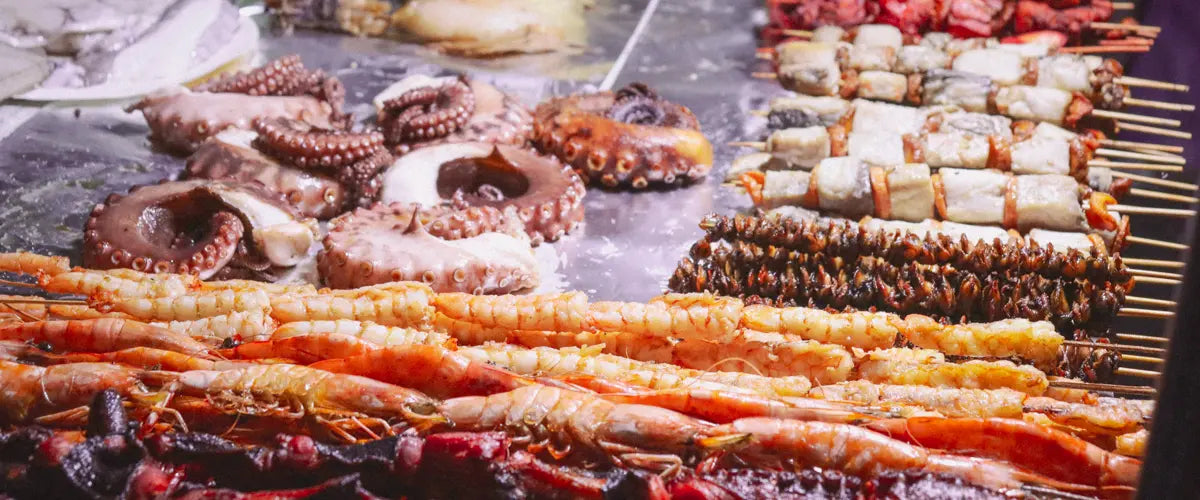
[takeaways] • Tanzania's must-try dishes include Nyama Choma (grilled goat meat), Ugali (a maize staple), Mshikaki (skewered street food), and Chipsi Mayai (a fries-and-egg fusion).
• Tanzanian food is defined by bold spice blends — turmeric, cardamom, ginger, cinnamon, and cumin all feature heavily across savory dishes.
• Sharing meals is a social occasion in Tanzania, and cultural etiquette matters — always eat, receive food, and wash with your right hand.
• Follow local recommendations over tourist reviews to find the best places to eat, and prioritize street food vendors with the longest lines.
• Tap water isn't safe to drink in Tanzania — bottled water is essential, including for ice in drinks.
• A Tanzania eSIM keeps you connected to local mobile coverage, making it easy to find vendors and food recommendations nearby. [/takeaways]
From Dar es Salaam to Dodoma, Zanzibar Island to the Serengeti, Tanzania is one of Africa's most fascinating nations and certainly one of the most memorable to visit. Many people head here for the stunning mountains and the incredible wildlife spotting — but there's also the delicious cuisine that millions of people might be overlooking by not having yet tried.
In this guide, we take you through some of the tastiest Tanzania food and popular dishes you can expect on your next trip abroad. Some, you may even be able to try at home — but trust us when we say you'll sample the best flavors when you try an authentic Tanzanian meal from a genuine vendor or restaurant.
Why do people love Tanzanian food?
Tanzanian food has a fantastic reputation for being warming, comforting, and fascinating from a recipe perspective. Tanzanian people see sharing food and meals as a social occasion, meaning you're rarely on your own if you want to get your fill.
Tanzanian food typically benefits from unique blends of spices and local ingredients, meaning you might expect the odd kick of turmeric, cardamom, and ginger paired with creative rice dishes, beans, omelettes, and curries. Crucially, there is something for everyone here, even if you don't particularly like hot or spicy food.
Some Tanzanian recipes are complex and require a very careful blend and balance of ingredients. It's why, regardless of whether or not you have the ingredients to hand, we seriously recommend you tuck into authentic Tanzanian food when you travel. Just be sure to prepare yourself for the potential spice levels if, for example, you're used to something a little on the milder side.
Tanzania food we recommend
If you've never tried Tanzania food before, we recommend sampling Nyama Choma, Ugali, Mchicha, Mshikaki, Chipsi Mayai, Pilau, and Kachumbari first. Here's what you can expect from each of these dishes and why the SIMOVO team rates them so highly!
[numbered title="Nyama Choma" pill="Grilled goat meat"]Nyama Choma is an immensely popular goat meat recipe that's become a national dish in Tanzania and Kenya, commonly enjoyed across East Africa. As Tayo Oredola states, it is a hearty main meal that is typically prepared with a blend of spices before meat is grilled to perfection. This gives it an unmistakably smoky flavor that many Tanzanian people associate with big celebrations — and it pairs wonderfully with fresh salad.[/numbered] [numbered title="Ugali" pill="Maize staple"]Ugali is a corn or maize dish, somewhat like porridge, that has a dough-like consistency. It's a classic part of many Tanzanian meals, frequently used as a side to soak up stews and eat with vegetables. As Irene Keliher states, this dish takes time and effort to perfect, meaning it's well worth trying from a seasoned chef in Tanzania to sample it at its best.[/numbered] [numbered title="Mchicha" pill="Spinach and coconut"]Mchicha is a popular Tanzanian dish that combines spinach or amaranth leaves with a variety of tomato, onion, grated coconut, and even peanut butter — and TasteAtlas even recommends enjoying it with rice or Ugali, mentioned above. It's Tanzanian food that you can use to build towards a filling meal no matter the time of day.[/numbered] [numbered title="Mshikaki" pill="Skewered street food"]If you're keen to explore Tanzania's street food scenes, you're likely to find plenty of vendors serving delicious Mshikaki, which is a regional take on skewered, marinated meat. Like Nyama Choma, cooking styles here really help to make chicken or goat meat smoky and flavorful. Aderinsola Adeosun's recipe, a Swahili take on the dish using beef, also recommends using raw papaya to help tenderize the meat you choose.[/numbered] [numbered title="Chipsi Mayai" pill="Fries and egg"]Chipsi Mayai is another Tanzanian street food favorite, this time curiously combining fries and egg! Specifically, this quick, high-protein meal, as Justin Fornal writes, is a fusion of scrambled egg and potato, sometimes served with a smattering of peppers, tomatoes, and onions. It's food you can certainly eat on the go, but might be best enjoyed tearing into at the table. You choose![/numbered] [numbered title="Pilau" pill="Spiced rice"]Pilau is a type of rice that is enjoyed the world over, but in Tanzania specifically, its name is lent to a dish that also consists of a clutch of spices such as cinnamon and cumin, and which often mixes in meat, onion, and pepper. The main difference with Tanzanian pilau is that the meat and onions are intentionally browned off without the risk of losing that incredible spice profile.[/numbered] [numbered title="Kachumbari" pill="Fresh salad"]Kachumbari is a delicious salad that's enjoyed across the Great Lakes, typically enjoyed as a side dish or as an accompaniment to many of the meals we've talked about already. With roots in South Asia, the salad brings together chopped cilantro, ripe tomatoes, raw onions, lemon juice, and chili peppers. As if you couldn't tell by now, Tanzanian food absolutely thrives on spices and aromatics![/numbered] [esim flag="🇹🇿" label="Tanzania" data="5GB · 30 days" price="$24.60" href="/products/tanzania" benefits="Instant QR setup · Reliable 4G/5G · No contract"]Find vendors and food ideas nearby — stay connected across Tanzania[/esim]
Tips for dining and traveling in Tanzania
If you're a foodie really looking to tuck into the best Tanzania food available when you travel, here are some tips you'll want to keep in mind.
[warning]Make sure to drink bottled water with meals in Tanzania, as tap water may not be safe to drink. That also goes for ice in your drinks — avoid it if it's come from a tap.[/warning] [tip title="Follow local hygiene and dining etiquette"]If you receive a bowl of water at your table, make sure to wash your hands with it. And, you must always use your right hand when receiving food, eating, and even washing.[/tip] [tip title="Ask locals, not tourists, for food recommendations"]Ask for local tips on the best places to eat! For example, a good place to start may be to search for relevant hashtags on social media, or to ask taxi drivers as you explore different towns and cities. It's important to trust local people's opinions on the food here over tourists![/tip] [tip title="Follow the crowds at street food vendors"]As with all street food, the more people line up at a vendor, the more likely it is you'll be enjoying fresh ingredients and well-prepared meals.[/tip] [tip title="Explore regional variations as you travel"]Flavors and recipes vary all across the country, so be sure to enjoy seafood dishes along the coast and regional takes on old classics closer to the cities.[/tip] [tip title="Carry Tanzanian Shillings for street food and markets"]When paying for food and drink in Tanzania, keep in mind that many vendors and eateries will accept cash over cards. Be sure to take some physical Tanzanian Shillings, TZS, with you if you're paying for street food or buying ingredients from markets in particular.[/tip] [tip title="Pack the right plug adapter"]If you're charging your phone up while looking for restaurants and vendors across Tanzania, you'll need to make sure you have a Type G or Type D plug adapter and potentially a power converter.[/tip] [warning]You can easily use Uber in built-up areas like Dar es Salaam, but they are not always available in rural areas. Regardless of where you get a taxi from, always make sure that your driver has the meter running before you go — otherwise, you might be stuck with a large bill that you don't expect.[/warning] [faq] [q]What is the most popular food in Tanzania?[/q] [a]Nyama Choma (grilled goat meat) and Ugali (a maize staple) are two of the most iconic dishes in Tanzania. Other favorites include Mshikaki (skewered street food), Chipsi Mayai (a fries-and-egg fusion), Pilau (spiced rice), Mchicha (spinach and coconut), and Kachumbari (a fresh tomato and onion salad).[/a] [q]What is Chipsi Mayai?[/q] [a]Chipsi Mayai is a popular Tanzanian street food dish combining French fries and scrambled egg into a single omelette-style meal, sometimes served with peppers, tomatoes, and onions. It's quick, high in protein, and a genuine Tanzanian street food specialty, particularly popular in Dar es Salaam and Zanzibar.[/a] [q]What spices are commonly used in Tanzanian cooking?[/q] [a]Tanzanian cuisine draws on a rich blend of spices including turmeric, cardamom, ginger, cinnamon, and cumin. These flavors run through many savory dishes, from rice preparations like Pilau to grilled meats like Nyama Choma and Mshikaki.[/a] [q]Is it safe to drink tap water in Tanzania?[/q] [a]No — tap water in Tanzania is not guaranteed to be safe to drink. Always stick to bottled water for drinking, and be cautious of ice in drinks unless you can confirm it's been made from purified water.[/a] [q]What dining etiquette should I know before visiting Tanzania?[/q] [a]Always use your right hand when eating, receiving food, or washing — this is an important cultural custom. If you're offered a bowl of water at the table, it's typically meant for washing your hands before the meal. Following local recommendations over tourist reviews is also a great way to find the most authentic food.[/a] [q]Do I need an eSIM for exploring Tanzanian food?[/q] [a]A Tanzania eSIM is a convenient way to stay connected to local mobile coverage throughout your trip — useful for finding vendors, checking food recommendations, and navigating between towns and cities as you explore the country's cuisine. It means no hunting for a local SIM card on arrival.[/a] [/faq] [esim flag="🇹🇿" label="Tanzania" data="5GB · 30 days" price="$24.60" href="/products/tanzania" benefits="Instant QR setup · Reliable 4G/5G · No contract"]Get connected before you land in Tanzania[/esim]