[takeaways] • The SIMOVO team's top eight Thailand temples to visit are Wat Muang, Wat Arun, Wat Rong Khun, Wat Phra That Doi Suthep, Wat Phra Kaew, Wat Saket, Wat Benchamabophit, and Wat Pho.
• Wat Muang is home to a 92-meter seated Buddha — one of the tallest Buddha statues in Thailand, visible from miles away.
• Wat Pho, home to the enormous Reclining Buddha, was established more than 500 years ago and remains the epicenter of traditional Thai massage.
• Strict etiquette applies at Thailand temples — cover your skin completely, remove shoes and accessories, and never touch monks or point your feet toward Buddha.
• It's illegal to disrespect the Thai royal family, and tap water isn't safe to drink anywhere in the country.
• A Thai eSIM makes it easy to plan your route via GPS between multiple temples in a single day. [/takeaways]
Millions of people visit Thailand every year for all kinds of reasons. Some come looking for love, others to sample the amazing food — but for many, the capital of Bangkok and beyond provide an important Buddhist pilgrimage point.
Yet, when it comes to Thailand temples, many tourists and even practising Buddhists based overseas may not know exactly where to start. Based on the experiences of the SIMOVO team, we're about to explore which shrines and sacred locations should be at the top of your must-see list.
Why visit Thailand temples?
Thailand temples, or Wats, offer some of the most visually stunning and immersive ways to experience Buddhist culture and teachings up close. For many people, visiting Wats is a deeply religious and life-affirming experience. For others, it's a wonderful opportunity to explore some of the most intricately-designed and built temples in the East.
From golden spires to gigantic tributes to Buddha, looking at photos of Thai Wats only gives you an idea of what to expect. There are tens of thousands of temples across the country, many of them based in the north, but there are also multiple thousands around the likes of Bangkok and Ayutthaya.
For many people, too, temples in Thailand offer wonderful opportunities to take moments of genuine peace and silence to refresh and look within oneself. Meditation is just one facet of Buddhism, of course, but temples are broadly open to people who are willing to learn more about religious practices provided they are respectful.
Thailand temples to visit first
Given the tens of thousands Thailand temples waiting for you to explore, it's easy to start feeling a little overwhelmed. If you're stuck for ideas, however, you are certainly in the right place!
SIMOVO's Thailand travelers recommend that you visit Wat Muang, Wat Arun, Wat Rong Khun, Wat Phra That Doi Suthep, Wat Phra Kaew, Wat Saket, Wat Benchamabophit, and Wat Pho. Let's take a closer look at why.
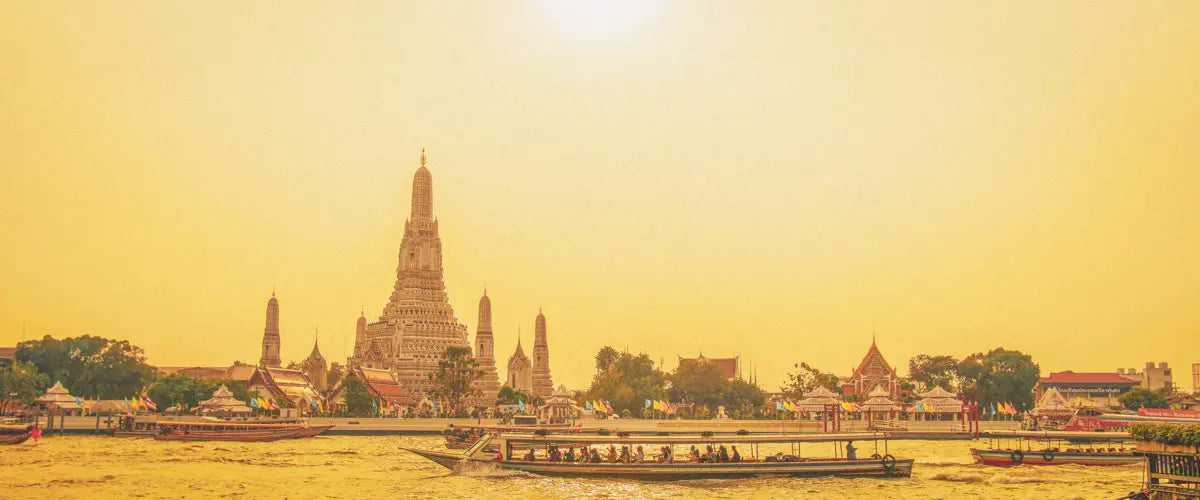
[numbered title="Wat Muang" pill="Giant Buddha"]Wat Muang is world-famous thanks to its incredible Buddha figure, which, while seated, measures around 92 meters tall. It's also popular with visitors for its Wihan Kaeo, or Glass Hall, which houses multiple fascinating artifacts. You can spy the temple from miles away in the distance thanks to the sheer height of the Buddha![/numbered] [numbered title="Wat Arun" pill="Temple of Dawn"]Down on Chao Phraya in the heart of Bangkok, the Wat Arun temple is notable for its impressive spire and its fantastic vantage point over much of the city and the river on which it's based. It's also known as the Temple of Dawn — and it looks spectacular in the early morning as light wanders across its tiles.[/numbered] [numbered title="Wat Rong Khun" pill="The White Temple"]Also known as the White Temple, this Chiang Rai shrine is one of the more modern structures listed in this guide, and is considered a great starting point for any visitors who are attending their first Buddhist temples. Believe it or not, the main hall even has murals of modern pop culture icons! It's a great way to apply an understanding of Buddhist teachings to a modern lens.[/numbered] [numbered title="Wat Phra That Doi Suthep" pill="Mountain temple"]This mountain temple is atop a fantastic vantage point looking over Chiang Mai, and you can access it via cable. Many braver visitors, however, choose to ascend the steep stairs ascending to the top to reach its golden chedi. It's one of many temples in the region popular with tourists, but it's also considered a major pilgrimage point for practising Buddhists around the world.[/numbered] [numbered title="Wat Phra Kaew" pill="Emerald Buddha"]This Grand Palace complex temple in the heart of Bangkok is also known as the Temple of the Emerald Buddha, and as the name suggests, is famous for a jade sculpture of Buddha that's instantly recognizable.[/numbered] [numbered title="Wat Saket" pill="Golden Mount"]Wat Saket is a temple found in Rattanakosin, and is known as the Temple of the Golden Mount. This Bangkok temple is accessible via steep steps up Phu Khao Thong, but is absolutely worth the effort, as it provides some of the best views across the old city and Bangkok's more modern features.[/numbered] [numbered title="Wat Benchamabophit" pill="The Marble Temple"]This Thai temple is also known as the Marble Temple due to its impressive structural facades and main hall, which is both elegant and hard-wearing. It's one of the more modern Thailand temples in our list, having been established in 1899 under King Chulalongkorn (Rama V) — making it around 125 years old. Many people visit this temple because of its relatively peaceful location and gorgeous courtyard.[/numbered] [numbered title="Wat Pho" pill="Reclining Buddha"]Close to the Grand Palace, Wat Pho (or, the Temple of the Reclining Buddha), has an enormous golden Buddha that, again, as its name suggests, is reclining. It was established some 500+ years ago, and it's still considered the epicenter of modern massage in the region.[/numbered] [esim flag="🇹🇭" label="Thailand" data="10GB · 30 days" price="$9.40" href="/products/thailand" benefits="Instant QR setup · Reliable 4G/5G · No contract"]Plan your route via GPS between temples — stay connected across Thailand[/esim]
Etiquette when visiting Thai temples
If you've never visited a temple in Thailand before, here are some must-dos to ensure that you are respectful as a newcomer.
[warning]You must completely cover your skin — as in, wear long sleeves and pants or skirts. Sleeveless tops and bottoms that uncover your knees are forbidden. Some temples are very strict and won't allow temporary coverings like shawls or scarves.[/warning] [tip title="Remove accessories, shoes, and watch your feet"]You must also remove any accessories, such as sunglasses, before stepping into a temple. You should also remove your shoes and avoid pointing your feet toward monks or Buddha.[/tip] [tip title="Stay quiet and switch your phone to silent"]Be as quiet as possible when touring temples — and that goes for your phone, too. Switch it to silent mode until you leave.[/tip] [warning]Never directly touch Buddhist monks at temples — women in particular must adhere to this, and it is also noted that women must hand items to men to be placed on shrines.[/warning] [tip title="No smoking or drinking alcohol at temples"]This is perhaps an obvious point, but you cannot attend a temple while smoking or drinking alcohol.[/tip] [tip title="Keep your head lower than Buddha and monks"]It is also expected that you keep your head lower than Buddha and any monks attending temples. Do also avoid sitting in areas designated for monks.[/tip]
Travel tips for visiting Thailand
Beyond Thailand's temples, here are some important points to remember when visiting Thailand — for the first or fortieth time.
[warning]Don't drink tap water when visiting Thailand, as it's not considered safe for consumption. Purchase bottled water for drinking and brushing teeth, and remember to avoid ice, too.[/warning] [tip title="Sort medical insurance before you travel"]It's a good idea to make sure you have medical insurance before you travel, as some care can be expensive for visitors.[/tip] [warning]You must always respect the royal family — it is illegal to disrespect or disparage them in any way.[/warning] [tip title="Always check the taxi meter is running"]When getting into a taxi, always make sure that your driver has the meter running.[/tip] [tip title="Carry cash — Thailand mainly operates on Baht"]Thailand mainly operates on cash rather than cards, so make sure you have enough physical Baht with you so that you can buy from local vendors and markets.[/tip] [warning]Avoid common scams like cheap entry to shows (they often result in expensive exit fees), and refuse free ribbons outside temples — sellers may ask for cash afterward.[/warning] [faq] [q]What are the best temples to visit in Thailand?[/q] [a]The SIMOVO team's top eight Thailand temples are Wat Muang (home to a 92-meter Buddha), Wat Arun (the Temple of Dawn), Wat Rong Khun (the White Temple in Chiang Rai), Wat Phra That Doi Suthep (a mountain temple above Chiang Mai), Wat Phra Kaew (the Temple of the Emerald Buddha), Wat Saket (the Golden Mount), Wat Benchamabophit (the Marble Temple), and Wat Pho (home to the Reclining Buddha).[/a] [q]What should I wear to visit a temple in Thailand?[/q] [a]You must completely cover your skin — long sleeves, and pants or a skirt that covers your knees. Sleeveless tops and shorts are forbidden at most temples, and some won't accept temporary coverings like shawls or scarves. Shoes and accessories such as sunglasses must also be removed before entering.[/a] [q]How old is Wat Pho?[/q] [a]Wat Pho is one of Bangkok's oldest temples, established more than 500 years ago — predating the founding of Bangkok itself in 1782. It's home to the enormous Reclining Buddha and remains the epicenter of traditional Thai massage today.[/a] [q]How tall is the Buddha at Wat Muang?[/q] [a]The seated Buddha at Wat Muang measures around 92 meters tall, making it one of the tallest Buddha statues in Thailand. It's visible from miles away thanks to its sheer size, and is a popular pilgrimage and tourist destination in Ang Thong province.[/a] [q]Is it safe to drink tap water in Thailand?[/q] [a]No — tap water is not considered safe for consumption anywhere in Thailand. Always purchase bottled water for drinking and brushing teeth, and avoid ice unless you can confirm it has been made from purified water.[/a] [q]Do I need an eSIM for visiting Thailand's temples?[/q] [a]A Thai eSIM is a convenient way to stay connected while temple-hopping — particularly useful for planning your route via GPS if you're visiting multiple Wats in a single day. It means no hunting for a local SIM card on arrival.[/a] [/faq] [esim flag="🇹🇭" label="Thailand" data="10GB · 30 days" price="$9.40" href="/products/thailand" benefits="Instant QR setup · Reliable 4G/5G · No contract"]Get connected before you land in Thailand[/esim]