[takeaways] • The four best places to visit in Ireland are Dublin, Galway, the Cliffs of Moher, and the Ring of Kerry.
• Ireland is road-trip friendly — the island extends around 300 miles from north to south, and most major destinations are manageable driving distances apart.
• Always pack waterproof clothing and layers when visiting Ireland — the weather is famously unpredictable and rain can arrive at any time of year.
• At the Cliffs of Moher, always stay on marked paths and behind safety barriers — the cliffs stand more than 214 meters above the Atlantic.
• Late spring and early fall offer the best balance of mild weather and manageable crowds — spring is especially beautiful for Ireland's natural landscape in bloom. [/takeaways]
The Republic of Ireland is widely regarded as one of the most beautiful island nations on the planet — a frequent vacation destination for millions across Europe and further afield. From rolling hills to wild, rugged coastlines, traditional pubs to windswept island tours, Ireland is a nation that has captured the hearts of many thanks to its free spirit and its rich, magnetic culture.
Regardless of whether you enjoy Irish dancing, the odd pint of Guinness, or just want to take a pilgrimage to the Blarney Stone, there are a million reasons to build your own Ireland itinerary and explore the Emerald Isle on your own terms. Before you set off, always load an eSIM for Ireland onto your smartphone — that way, any mobile data you use is already budgeted and paid for, and you'll always connect to the fastest and most reliable network available.
Ireland itinerary overview
Ireland is an absolutely fabulous nation to explore if you want to get back in touch with nature, enjoy wild and breezy island hopping, or dip into traditional European culture. Much of it can be enjoyed as part of a longer road trip — the island extends only around 300 miles from north to south, making it one of Europe's most manageable self-drive destinations. It's also well connected by rail links if you'd prefer not to get behind the wheel.
[tip title="Ireland is one of Europe's best road trip destinations"]At around 300 miles from north to south, Ireland's compact size makes it ideal for self-drive itineraries. You can feasibly cover Dublin, Galway, the Cliffs of Moher, and the Ring of Kerry in a single trip without any leg feeling too taxing. The west coast in particular is spectacular by road.[/tip]
Think carefully about the sort of vacation you're looking for. Many people choose to go the city break route and stick to Dublin and Galway, while others choose to drive the rugged coast or explore the countryside. Regardless, make sure you dress comfortably and wear footwear suited to the terrain you're likely to traverse.
[tip title="Check the Ireland cost guide before you budget"]It's a good idea to check out our Ireland cost guide so you can get a feel for how much you'll need to budget for activities, accommodation, and sights. Traveling to and exploring Ireland is probably cheaper than you might expect — but it still pays to be prepared.[/tip]
Best places to visit in Ireland
Even though Ireland is small compared to many of the countries we've written itinerary guides for, there are tons of things to see and do up and down the country. The team recommends prioritizing Dublin, Galway, the Cliffs of Moher, and the Ring of Kerry.
[numbered title="Dublin" pill="Capital and cultural heart"]Ireland's capital and top tourist destination — home to the Guinness Storehouse, Dublin Castle, stunning cathedrals, free museums, and one of the most celebrated pub scenes in the world.[/numbered] [numbered title="Galway" pill="Music, pubs and coast"]World-famous for its traditional live music scene, harbor atmosphere, and cozy pubs — plus a great base for Connemara National Park and the Cliffs of Moher.[/numbered] [numbered title="Cliffs of Moher" pill="214m Atlantic cliffs"]More than 214 meters above the Wild Atlantic Way — elevated viewpoints, guided tours, and views of the Aran Islands. One of Ireland's most dramatic and iconic landscapes.[/numbered] [numbered title="Ring of Kerry" pill="111-mile scenic road trip"]A spectacular 111-mile road trip around the Iveragh Peninsula — taking in the Gap of Dunloe, Rossbeigh, the Torc Waterfall, and some of Ireland's most breathtaking scenery.[/numbered]
Dublin
Dublin is the heart of Ireland, welcoming millions of visitors each year as the nation's top tourist destination. It's a quaint but thriving city immensely proud of its literary roots, historic buildings, parkland spaces, and burgeoning pub scene. It's the home of Guinness — with the Storehouse at the heart of the fermentation — and the cathedral and church architecture is well worth exploring alongside Dublin Castle, which has stood since the 13th century. Free museums, guided tours, and regular festivals round out a city that rewards multiple visits.
Galway
Galway is world-famous for its traditional live music scene, busking, harbor atmosphere, and cozy traditionally Irish pubs. Like Dublin, it's very much a festival city — theatre, arts, literature, and seafood all get their own celebrations throughout the year. It's also a great base for exploring Connemara National Park, and the Cliffs of Moher are easily reachable from here.
Cliffs of Moher
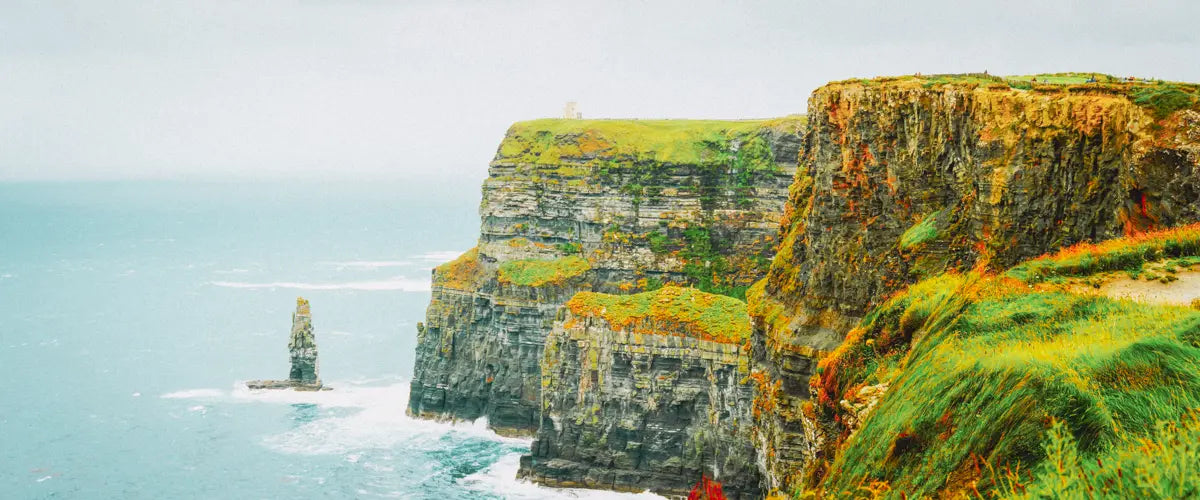
When we talk about Ireland's famously rugged coast, the Cliffs of Moher really demonstrate the concept best. Overseeing the West Clare coastline, the cliffs stand more than 214 meters above the water, with elevated viewpoints and guided tours available to help you spy the Aran Islands and the wild Atlantic beyond.
[warning]The Cliffs of Moher drop more than 214 meters into the Atlantic Ocean. Always stay on the marked paths and behind safety barriers — some sections of the cliffs are unfenced and the ground near the edge can be unstable. Never lean over the edge for photographs. The site's visitor center provides full safety guidance before you set out on the clifftop walks.[/warning]
Ring of Kerry
The Ring of Kerry is a fantastic road trip opportunity in the heart of the Iveragh Peninsula. Home to a famous cycling route, the 111-mile journey takes you around sights including the Gap of Dunloe, Rossbeigh, and the Torc Waterfall. This rugged trail is an absolute must if you really want to see Ireland at its most beautiful and natural.
Ireland itinerary templates
Here are some Ireland itinerary templates based on our top places to visit. Feel free to extend, shorten, or add additional stops as you wish.
Ireland itinerary for 7 days
- Days 1–3: Start on the east coast in Dublin and explore the city.
- Days 4–5: Head across the country to Galway and enjoy the west coast.
- Day 6: Travel south toward Clare and the Cliffs of Moher.
- Day 7: Take one last road trip down toward the Ring of Kerry.
Ireland itinerary for 10 days
- Days 1–3: Establish your base in Dublin.
- Days 4–6: Travel cross-country, visiting towns along the way, and end up in Galway.
- Days 7–8: Find somewhere to stay in Clare and visit the Cliffs of Moher.
- Days 9–10: Head south and explore the Ring of Kerry, taking in Cork a little further along.
Ireland itinerary for 14 days
- Days 1–4: For longer trips, really make the most of Dublin first.
- Days 5–7: Take a leisurely drive across the heart of Ireland and base yourself in Galway.
- Days 8–11: Head south and base yourself in Cork or Killarney, exploring the coast and the Ring of Kerry.
- Days 12–14: Finish your journey in historic Clare and along the Cliffs of Moher.
Best time to visit Ireland
[warning]Irish weather is famously unpredictable — rain can arrive at any time of year, including in the middle of summer. Always pack waterproof clothing and warm layers regardless of when you travel. This is especially important on the west coast and along the Cliffs of Moher, where Atlantic weather conditions can change rapidly.[/warning] [tip title="Late spring and early fall are the sweet spots"]We recommend visiting Ireland in late spring or early fall — when the weather is likely to be fairly mild and the crowds are unlikely to be too large. Spring visits are particularly special if you want to see Ireland's natural landscape bursting into bloom. Summer brings the best weather but also the biggest tourist numbers.[/tip] [faq] [q]What are the best places to visit in Ireland?[/q] [a]The four best places to visit in Ireland are Dublin (the capital, famous for Guinness, literary heritage, and pub culture), Galway (traditional music, festivals, and gateway to the west coast), the Cliffs of Moher (more than 214 meters above the Wild Atlantic Way), and the Ring of Kerry (a spectacular 111-mile scenic road trip around the Iveragh Peninsula). Together they cover Ireland's cities, coast, and wild countryside.[/a] [q]What is the Ring of Kerry?[/q] [a]The Ring of Kerry is a 111-mile circular driving and cycling route around the Iveragh Peninsula in County Kerry, southwestern Ireland. It passes through some of Ireland's most dramatic and beautiful scenery — including the Gap of Dunloe, Killarney National Park, Rossbeigh Beach, and the Torc Waterfall — and is widely considered one of the most scenic road trips in Europe. Most drivers allow a full day to complete the route comfortably.[/a] [q]What are the Cliffs of Moher?[/q] [a]The Cliffs of Moher are a UNESCO Global Geopark site on the west coast of County Clare, standing more than 214 meters above the Atlantic Ocean at their highest point. They stretch for approximately eight kilometers along the coastline and offer views of the Aran Islands on a clear day. The site has a visitor center, guided walks, and elevated viewpoints. Always stay on marked paths — some sections near the edge are unfenced and potentially dangerous.[/a] [q]When is the best time to visit Ireland?[/q] [a]Late spring (May to June) and early fall (September to October) offer the best overall conditions — mild temperatures, manageable crowds, and Ireland's natural landscape at its most beautiful. Summer (July to August) is the most popular and busiest period with the most reliable weather. Irish weather is unpredictable in all seasons — always pack waterproofs and layers regardless of when you travel.[/a] [q]How long do I need for an Ireland trip?[/q] [a]Seven days is the minimum for a meaningful Ireland trip — enough to cover Dublin, Galway, the Cliffs of Moher, and the Ring of Kerry at a reasonable pace. Ten days allows for a more relaxed experience with additional time in Cork or Killarney. Fourteen days is ideal for first-time visitors who want to thoroughly explore the east coast, west coast, and southwest without feeling rushed. Ireland's compact size makes it well-suited to self-drive itineraries at any length.[/a] [q]Do I need an eSIM for Ireland?[/q] [a]A SIMOVO Ireland eSIM is one of the most practical additions to any Irish road trip. It activates on landing, connects you to Ireland's best available networks, and gives you prepaid data to navigate the Ring of Kerry, find pubs in Galway, and stay in touch throughout your adventure — without roaming charges when you get home.[/a] [/faq] [esim flag="🇮🇪" label="Ireland" data="10GB · 30 days" price="$8.50" href="/products/ireland" benefits="Instant QR setup · Reliable 4G/5G · No contract"]Stay connected across Ireland — no roaming charges[/esim]