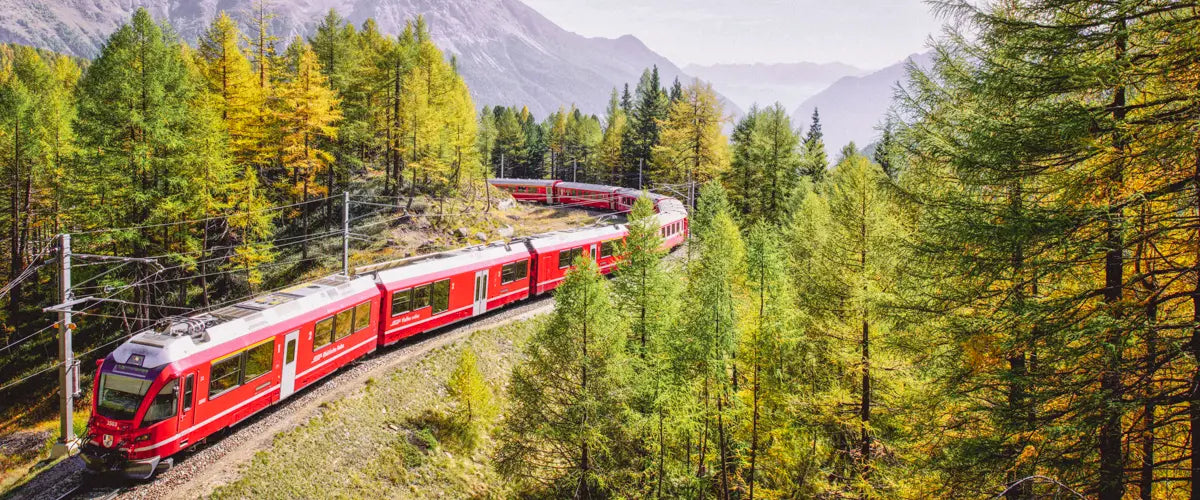
[takeaways] • Trains connect European cities conveniently, often dropping you right in the town or city center.
• High-speed routes like the TGV, Eurostar, and AVE get booked up fast, so book ahead to secure a seat and the best price.
• Download official rail apps like Deutsche Bahn and Trenitalia for tickets and live updates, and check local fare-saving apps like SplitMyFare in the UK.
• Not every country has gone fully digital, so be ready to carry paper tickets where required.
• If traveling overnight, let someone know your plans or travel with people you know.
• A SIMOVO eSIM for Europe covers multiple countries on one plan, so you're not swapping SIMs or hunting for WiFi at every border. [/takeaways]
If you're planning to travel across Europe in the near future, one of the fastest and easiest ways to do so is by catching a train or two. Countries like the UK, Germany, and France are well-known for their extensive rail connections, which are great for accessing some of the most popular towns and cities.
However, if you're more of a driver, or if you've never boarded a train outside of your home country before, it makes sense to clue up on a few tips and tricks for how to make the most of your public transport connections. Thankfully, you're in the right place, as we're about to share some must-dos before you hit the tracks.
Why travel by train across Europe?
Whether you're looking to connect city breaks together as part of an Ireland itinerary, or if you simply want to avoid driving on vacation, there are plenty of great reasons why taking the train makes sense.
On the whole, European cities are connected conveniently by extensive rail networks, and much of the time, you'll find railway stations in the heart of the towns and cities you explore. That means you can pretty much step off a train, out of the station, and start exploring.
Trains are also frequently less hassle than airplanes when it comes to luggage allowance and checking. Because you're heading cross-country and not heading into the air, you won't be forced into extensive interrogations or asked to take your shoes off before you board!
For people looking for eco-friendly vacations, too, traveling by train across Europe is a great idea. Cars and planes emit enormous amounts of carbon dioxide, meaning the more people take the train, the better.
Plus, you're likely to find plenty of train companies and services across Europe that offer a balance of comfort and speed. Yes, the British stereotype is that trains rarely connect on time, but take a look at Germany and France's rail networks, for example – and the UK does still get it right more times than many Brits are willing to concede!
So, unless you have your heart absolutely set on a road trip, consider taking to the tracks rather than the road.
Tips for traveling by train in Europe
It's easy to assume that all train companies across Europe will follow similar setups and rules – but every country's public transport system has its own quirks. Therefore, consider the following tips and pointers to be something of a general guideline – and apply them to wherever you go on the continent.
Before we get into these tips, however, our number one recommendation should be pretty obvious – to download an eSIM for Europe! SIMOVO's European eSIMs cover multiple destinations, meaning you can cross borders and keep an eye on train connections without having to swap SIMs or look for new WiFi spots every five minutes. Choose a package that suits your data usage and how long you're traveling for, and get your internet usage covered.
[esim flag="🇪🇺" label="Europe" data="20GB · 30 days" price="$27.70" href="/products/europe" benefits="Instant QR setup · Reliable 4G/5G · No contract"]Download your Europe eSIM before you hit the tracks[/esim]
Now we've made it clear why an eSIM is a must-buy, here are some European train travel tips you should put into practice.
[tip title="Don't leave booking high-speed trains to the last minute"]There's a reason why, if you've ever tried to board a high-speed European train, seats get booked up fast. Super-speedy rail connections, such as those running on the TGV, Eurostar, or AVE, are extremely popular. Therefore, you should always make a point to book early – and this is generally good practice if you want to save money, too (and who doesn't?).[/tip] [tip title="Download and use official apps"]Research the official rail company apps that apply to your European adventures early and book through them for the right tickets – and to access accurate updates on platforms, departures, and (hopefully not!) delays. Look for apps such as Deutsche Bahn and Trenitalia, for example, and in the UK, consider using apps like SplitMyFare to save cash on upfront train fares. In the UK, too, you can even get credits toward Uber fares by booking trains through their app.[/tip] [tip title="Pack as light as you can"]It's tempting to max out the luggage flexibility you get on trains vs. what you experience on planes. However, in many cases, too much baggage means you'll be lifting heavy bits and pieces onto high racks and potentially having to trust your luggage is safe while you sit several rows away. If you can, leave most of your items at your home base and travel with a bag or two to keep things simple.[/tip] [tip title="Not everywhere accepts digital tickets, so be prepared to collect paper"]Many European train networks have gone fully digital, but others still expect you to present paper tickets at the barriers at stations and on board as you travel. It's never wise to try and travel without tickets, either – you could face a fine even if you have a legitimate reason why you couldn't purchase it online or at the station. Regardless, check ticketing rules for where you're traveling so you're not caught out at the worst possible time.[/tip] [tip title="Save your tickets offline"]On the note of digital tickets, while an eSIM will cover you for as much of your European journey as possible, you may still find that going through tunnels and traveling across rural areas means you lose access to the internet. If you're using digital tickets, take screenshots of your QR codes so that conductors can still scan them and allow you to travel, even if your mobile data is down.[/tip] [tip title="Check out rail passes and money off"]You can often buy season passes that allow you to travel on trains, trams, buses, and more in certain European countries. For example, check out our guide to Germany train pass options and see how much cash you can save when you go. Don't just assume that you have to pay full rate for tickets that are advertised – and again, Uber sometimes runs promotions for trains that are worth checking out.[/tip] [warning]Traveling at night might seem scary in a new country, but there are some benefits to doing so – for example, you may be able to save money by traveling at unsociable times of day. For safety's sake, though, always make sure you do so with people you know, or at least let loved ones know where you're going and when you arrive at your destination.[/warning] [tip title="Keep fed and watered"]There are some pretty long train journeys that take place across Europe, so be prepared to take snacks and drinks to weather the routes ahead. Unfortunately, there's never a guarantee that the train service you'll take will offer a dining cart or snacks trolley. Take our advice from earlier, too, and pack lightly on snacks and drinks – just enough to keep you going until you reach your destination.[/tip] [tip title="Take an adapter"]There's a good chance the train you'll board will have plug sockets on board so you can charge up phones, tablets, and laptops. However, make sure you have the right adapter ready for the country you're traveling through. If you're really lucky, the train you get on will have USB ports, meaning you might be able to skip adapters altogether.[/tip] [faq] [q]What are the fastest trains in Europe?[/q] [a]The TGV in France, Eurostar across the Channel, and AVE in Spain are among the best-known high-speed services – all are popular enough that seats can sell out, so booking ahead pays off.[/a] [q]Do I need to book train tickets in advance in Europe?[/q] [a]For high-speed and popular routes, yes – booking early both secures your seat and tends to get you a better price than booking at the last minute.[/a] [q]Are train tickets in Europe digital or paper?[/q] [a]It depends on the country and operator. Many networks have gone fully digital, but others still require paper tickets, so check the rules for wherever you're traveling before you go.[/a] [q]Is it safe to travel by train overnight in Europe?[/q] [a]Generally, yes, and it can save you money – but it's safest to travel with people you know, or at least let loved ones know your route and expected arrival time.[/a] [q]Do I need an eSIM for train travel across Europe?[/q] [a]Yes – a SIMOVO eSIM for Europe covers multiple destinations on a single plan, so you can cross borders and check train updates without swapping SIMs or hunting for WiFi.[/a] [/faq] [esim flag="🇪🇺" label="Europe" data="20GB · 30 days" price="$27.70" href="/products/europe" benefits="Instant QR setup · Reliable 4G/5G · No contract"]Grab a SIMOVO Europe eSIM so you're covered from station to station[/esim]