[takeaways] • Peru sits on the west coast of South America, bordered by Colombia and Ecuador to the north, Brazil to the east, Bolivia to the southeast, and Chile to the south.
• Peru's climate splits into three distinct zones — the hot, humid Amazon rainforest, the wet/dry seasonal Andes mountains, and the coast, which shifts between sunny summers and overcast, humid winters.
• Must-visit destinations include Machu Picchu, Lake Titicaca, Colca Canyon, and the Sacred Valley, alongside cities like Lima, Cusco, Arequipa, Iquitos, and Chiclayo.
• Colca Canyon treks can reach up to 17,000 feet — altitude sickness precautions are essential across much of Peru's highland terrain.
• Cash is essential outside Lima and major tourist spots, as cards aren't widely accepted elsewhere in the country.
• A Peru eSIM keeps you connected to the best mobile networks and lets you share your journey with friends and family back home. [/takeaways]
Home to one of the world's best-loved UNESCO World Heritage Sites, Peru is a South American getaway spot that combines some of the most breathtaking natural sights that the region has to offer. Whether you're exploring ancient Inca history, scaling the Andes mountains, or taking in the incredible variety of plants and animals north to south, there are tons of reasons to make Peru your next vacation destination.
In this guide, we explore exactly where Peru is located, the countries in borders, and the landscapes you can explore here. We'll also take you through some of the best places to visit while you're here, where you can take city breaks, and a few tips on how to make the most of your time away.
Where exactly is Peru located?
Peru is a country to the west of South America. Thanks to being nestled within both the West and South hemispheres, it boasts an almost unique biodiversity. It has a western coast, an eastern jungle, and central peaks. Specifically, it has a latitude and longitude of 10° 00 S, 76° 00 W, respectively.
Peru's neighboring countries
Peru is bordered by five different countries — Colombia and Ecuador to the north, Brazil to the east, Bolivia towards the southeast, and Chile to the south. That means if you're planning a road trip across South America, there are plenty of borders in Peru that give you access to some of the most popular countries in the region.
As mentioned, Peru has a western coastline that backs onto the Pacific Ocean. Traveling westward across the ocean along Peru's latitude, you'd eventually pass French Polynesia before reaching the western Pacific islands and, further still, Southeast Asia.
Peru climate and landscapes
Peru has something of a unique climate thanks to its curious location — some of it is arid, other areas are high and cold, while others are warm and humid. It is not an equatorial country, but many people find it sweltering if they are used to drier, colder climates elsewhere.
We've split the Peruvian climate and landscape into three main categories to give you a clearer idea of the temperature and weather out here.
Rainforest
Peru's rainforest landscape is, specifically, Amazonian jungle! This is out to the east of the country, and it's typically very hot and very damp all year round. You're likely to experience temperatures as high as 90°F in daytime at this side of the country, and rainfall is at its peak between December and March.
Mountains
In the Andes and La Sierra, you're likely to experience two main seasons — wet and dry. The wet season, typically spanning between November and stretching into the spring, is marked by extreme downpours and extremely warm nights. The mountains during the rest of the year, however, are much better for trekking, because the days are much brighter and warmer. That does, however, frequently mean the nights are cold.
Coast
You can generally split the Peruvian coastal year in two — summer and winter. The summer weather here tends to arrive any time between December and March. That means it's very sunny and extra hot — 86°F is likely to be the warmest the coastal areas get during this time of year. If you prefer your coastal vacations a little cooler, be sure to travel any other time of year — it tends to be overcast, but still damp and humid in some of the nearby cities.
Places to visit in Peru
There are lots of great places to visit in Peru that dive deep into the area's mysterious history and unique natural landscape — above all, we recommend you check out Machu Picchu, Lake Titicaca, Colca Canyon, and the Sacred Valley.
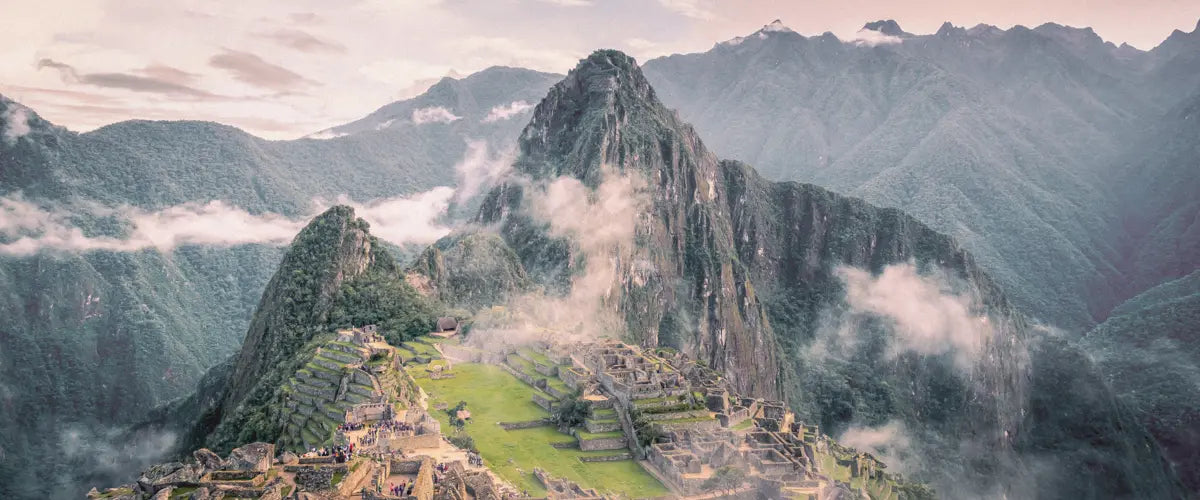
[numbered title="Machu Picchu" pill="Lost City of the Incas"]Machu Picchu was actually hidden away for hundreds of years, and only rediscovered by outside explorers in the early 20th century! This ancient settlement is referred to by many as the "Lost City of the Incas", and even now, the abandoned structures here remain fairly mysterious — and well worth exploring.[/numbered] [numbered title="Lake Titicaca" pill="Largest lake in South America"]Lake Titicaca is found between Peru and Bolivia, and it's the largest body of water of its kind across the continent. A trip here means you can sail around and visit man-made islands and settlements, go kayaking, hike nearby hills, and watch the stars go by across an unspoiled night sky.[/numbered] [numbered title="Colca Canyon" pill="High-altitude trekking"]Colca Canyon offers some of the most breathtaking yet most challenging treks and trails around Peru's peaks. Hike up to 17,000 feet, explore local churches and ancient farming terraces, and maybe even spot a majestic condor or two — just make sure you're well-prepared for the altitude![/numbered] [numbered title="The Sacred Valley" pill="Inca ruins and villages"]The Sacred Valley is a superb accompaniment to Machu Picchu as an exploration of ancient Inca sites, ruins, and villages. It's much lower in altitude than some of the other historical spots across the region, and there's the added bonus of several modern spas, hotels, and cuisine to enjoy across the way.[/numbered]
City breaks in Peru
Of course, Peru isn't just about ancient ruins and dizzying peaks, as there are plenty of cities to explore, too. Many travelers check out the capital of Lima, for example, a coastal and historic city that acts as a great introduction to regional culture.
Beyond Lima, however, there's also ancient Cusco, which was actually once the capital of the Inca — and you'll find it as a nice gateway toward Machu Picchu. There's also the humid, jungle city of Iquitos, the trading epicenter of Chiclayo, and the volcanic metropolis of Arequipa, sometimes known as Peru's White City.
[esim flag="🇵🇪" label="Peru" data="10GB · 30 days" price="$27.80" href="/products/peru" benefits="Instant QR setup · Reliable 4G/5G · No contract"]Stay connected to the best mobile networks across Peru[/esim]
Peru travel tips for newbies
Let's close our guide with some handy tips you might want to put into action when visiting Peru for the first or fiftieth time.
[warning]As you've read, many of the best things to see in Peru are very high up in the air! Therefore, it's always a good idea to take your walks and hikes slow and steady, and to have altitude sickness medicine handy if you're susceptible to heights.[/warning] [tip title="Carry cash outside Lima and tourist areas"]You should ideally take cash with you if you'd like to buy from local vendors and stores — cards aren't accepted widely unless you stick to Lima and tourist spots.[/tip] [warning]Avoid drinking tap water in Peru — stick to bottled or purified. It's also wise to avoid eating raw salad or vegetables, and to always peel fruit before eating.[/warning] [tip title="Pack layers for Peru's varied climate"]Thanks to Peru's varied climate, pack appropriately for the region or landscape you're spending most time in — pack layers and plenty of sunscreen at the absolute least.[/tip] [tip title="Book flights, stays, and attractions well in advance"]Where possible, book your flights, accommodations, and even entry into some of Peru's best-known attractions as far ahead of time as you can. They're likely to get booked up fast no matter what time of year you travel![/tip] [faq] [q]Where is Peru located?[/q] [a]Peru is located on the west coast of South America, with coordinates of approximately 10°00'S, 76°00'W. It's bordered by five countries: Colombia and Ecuador to the north, Brazil to the east, Bolivia to the southeast, and Chile to the south, with a long western coastline along the Pacific Ocean.[/a] [q]What countries border Peru?[/q] [a]Peru borders five countries: Colombia and Ecuador to the north, Brazil to the east, Bolivia to the southeast, and Chile to the south. This makes Peru a useful hub for a wider South American road trip or multi-country itinerary.[/a] [q]What is the climate like in Peru?[/q] [a]Peru has three distinct climate zones. The Amazon rainforest in the east is hot and humid year-round, with peak rainfall between December and March. The Andes mountains have a wet season (roughly November to spring) and a drier, better-for-trekking season the rest of the year, with cold nights. The coast alternates between a sunny, hot summer (December to March) and an overcast, humid rest of the year.[/a] [q]What are the best places to visit in Peru?[/q] [a]Peru's must-visit destinations include Machu Picchu (the Lost City of the Incas), Lake Titicaca (the largest lake in South America, shared with Bolivia), Colca Canyon (high-altitude trekking and condor spotting), and the Sacred Valley (a lower-altitude complement to Machu Picchu). Beyond these, cities like Lima, Cusco, Arequipa, Iquitos, and Chiclayo are all worth exploring.[/a] [q]Do you need to prepare for altitude sickness in Peru?[/q] [a]Yes — many of Peru's best-known destinations, including Machu Picchu, Cusco, and Colca Canyon, sit at high altitude. Take hikes slowly, stay hydrated, and carry altitude sickness medication if you're susceptible, particularly if you're trekking up to elevations as high as 17,000 feet in areas like Colca Canyon.[/a] [q]Do I need an eSIM for visiting Peru?[/q] [a]A Peru eSIM is a convenient way to stay connected to the best available mobile networks throughout your trip — useful for navigating between destinations, staying in touch with loved ones, and sharing your journey as you explore. It means no hunting for a local SIM card on arrival.[/a] [/faq] [esim flag="🇵🇪" label="Peru" data="10GB · 30 days" price="$27.80" href="/products/peru" benefits="Instant QR setup · Reliable 4G/5G · No contract"]Get connected before you land in Peru[/esim]