[takeaways] • The six best Turkish dishes to try are traditional kebabs, meze, lahmacun, pide, baklava, and menemen.
• Turkish dining is built around sharing — embrace the meze spread and leave the knife and fork on the table.
• Turkish street food is a cultural institution — you'll rarely walk far without finding something worth stopping for.
• If you have a sensitive palate, yogurt is your friend — it's widely available and pairs well with spicier dishes.
• Build food into your Turkey itinerary as a priority — plan around local meals rather than falling back on convenience eating. [/takeaways]
One of the many, many reasons why so many people travel to Turkey every year is for the fantastic food. If you have a taste for Mediterranean or Eastern cuisine, there's even a good chance you may have sampled some of the delicacies Turkey has to offer without setting foot on a plane or boat.
As many foodies and travelers will tell you, there is nothing quite like eating authentic national cuisine from the country it's prepared in. We ran a quick survey with those of us in the SIMOVO team who have visited the region at least once, and put together a guide to the best food to eat in Turkey while you explore its wonderful history and cityscapes.
While you're exploring, it's also worth grabbing an eSIM for Turkey so you have access to the best local restaurants at your fingertips while searching TripAdvisor. Regardless, let's dive into a world of Turkish cuisine — and why it's worth travelling here purely for the food and drink.
Why Turkish food is famous around the world
Turkish food is partly so popular the world over because it's designed to be enjoyed while socializing. Similar to how Greek meze is prepared in small dishes so that family and friends can easily dip in and out of appetizers, Turkish buffets are delicious finger-food displays laid out so you can pick and choose what you like and move on when you're ready.
Turkish dishes are often heavy on meat, but there are options for all dietary requirements if you know where to look. It's also a haven for spice lovers — plenty of dishes get an extra kick from sumac and cumin, and you're rarely two mouthfuls away from a hint of mint or parsley if you prefer a herby finish.
Beyond the tastes, there's a bit of history to why Turkish cuisine has spread across all four corners of the globe. Turkey was, of course, the seat of the Ottoman Empire, meaning that for centuries the best-loved food and drink of the Turkish people have been shared across continents.
That said — and as mentioned — you really cannot beat the real thing as far as Turkish food is concerned. After checking out the dishes in this guide, we highly recommend building restaurants and cafes you find online into your Turkey itinerary. Budget appropriately, but rest easy knowing that even the tastiest Turkish cuisine won't burn a hole in your pocket.
Best food to try in Turkey
After surveying the SIMOVO team, it was obvious that the best-loved Turkish treats include traditional kebabs, meze, lahmacun, pide, baklava, and menemen. There are regional dishes worth trying too, depending on where in Turkey you travel — we'll cover some of our regional favorites a little further down.
[numbered title="Kebabs" pill="Street food staple"]Authentic Turkish shish and doner kebabs are a million miles from the night-out version you might know back home. Served in wraps with a variety of dressings and always within easy reach on the street.[/numbered] [numbered title="Meze" pill="Social dining"]A Mediterranean speciality and one of the key reasons dining in Turkey is such a social affair — shared starters and dips including pulses, veggies, yogurt, and cheese before the main course arrives.[/numbered] [numbered title="Lahmacun" pill="Turkish flatbread pizza"]A traditional Turkish flatbread topped with mince, vegetables, and a range of spices and herbs. Think spicy pizza without the cheese — and surprisingly easy to eat on the go.[/numbered] [numbered title="Pide" pill="Eat with your hands"]Similar to lahmacun but served with a wider range of toppings including meat, vegetables, cheese, and herbs. Ideal for eating by hand — compare the two and decide which you prefer.[/numbered] [numbered title="Baklava" pill="Sweet & crispy"]Layers of sweet nuts, honey, and syrup packed into a crispy pastry. A Mediterranean speciality, but the Turkish version is easily one of the most memorable takes on this classic dish.[/numbered] [numbered title="Menemen" pill="Turkish scrambled eggs"]Simple, fresh, and delicious — scrambled eggs mixed with peppers, tomatoes, onions, and herbs. One of the best breakfasts you'll have in Turkey, and a staple across cafes and homes alike.[/numbered]
Kebabs
If you're from the UK, the idea of a kebab might not seem too different from what you're used to. But authentic Turkish shish kebabs, served in wraps with a variety of dressings, are a million miles from the night-out food you'd grab down the street. We recommend trying both doner and shish kebabs for a variety in meat and taste. The best news is that kebabs are street food staples in Turkey — you'll never be too far away from one.
Meze
If meze sounds familiar, it's because it's something of a Mediterranean speciality, and it plays a big part in why dining in Turkey is such a social affair. Mezes in Turkey cover a range of different starters and dips that you can share with others — selections of pulses and veggies, yogurt dips, and different types of cheese. The meat usually arrives in the next course.
Lahmacun
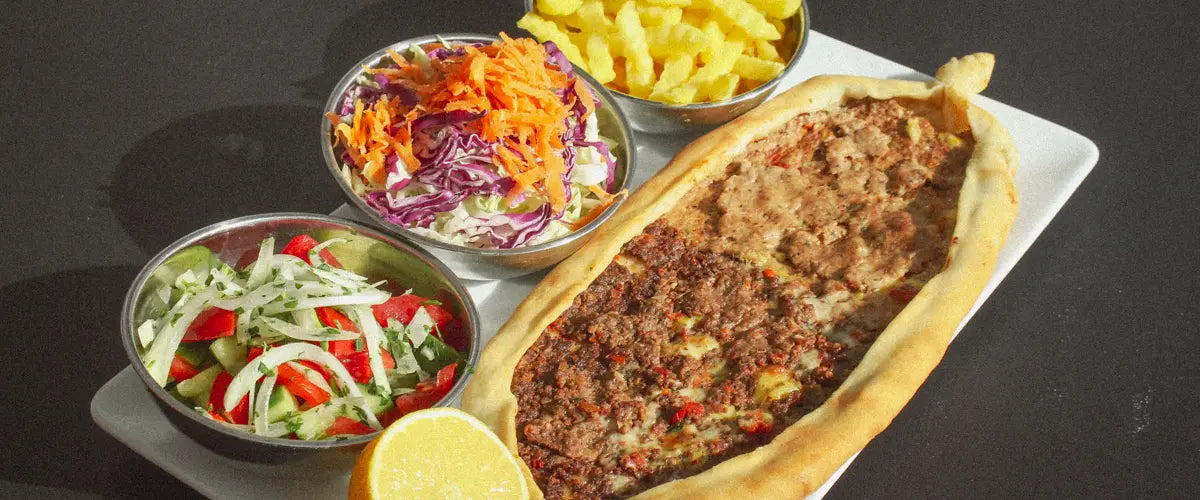
Believe it or not, Turkey is pretty big on pizza too. The lahmacun is essentially a traditional Turkish flatbread adorned with veggies, mince, and a range of spices and herbs. Think of it as a spicy pizza without the cheese — and one that's perfectly suited to eating on the move.
Pide
Pide is a type of flatbread dish served with a range of meat, vegetables, cheese, and herbs — rather like lahmacun but with different toppings and a slightly different texture. Pide tends to be easier to eat by hand, so compare and contrast with the lahmacun based on your own tastes.
Baklava
This classic pastry dish has layers and layers of sweet nuts, honey, and syrup, and it really packs a crispy crunch. It's something of a Mediterranean speciality, but the Turkish spin on baklava is easily one of the most memorable takes on the dish.
Menemen
Turkish cuisine is all about mixing together lots of ingredients that really work well together — without tons of scientific preparation. Menemen is a simple but delicious dish of scrambled eggs blended with veggies including peppers and tomatoes, and chopped soft onions and herbs. One of the best Turkish breakfasts you can order.
Regional Turkish dishes to try
We've explored some of the best food to eat in Turkey on a broad scale — but what about hidden regional delicacies? Here's a quick rundown of dishes worth discovering on your travels.
- Mercimek Çorbası — a type of lentil soup served with lemon slices.
- Gözleme — special Turkish crepes served with spinach.
- Patlican söğürme — minced eggplant with roasted vegetables, yogurt, and olive oil.
- Tirnak ekmek — finger-food bread, densely baked and designed for eating with your hands.
- Sucuk — a type of spiced sausage made from lamb, beef, and other meats.
Street food culture in Turkey
Street food culture has exploded worldwide over the past decade, and it really does have a home in Turkey. You'll barely walk anywhere without being able to enjoy some finger food on the go.
It's actually part of the cultural landscape too. During festivals such as Ramadan, for example, street food vendors open up after fasting so that people can come together and share in the joy of food. You might not even need to book too many restaurant reservations when you visit — just find a lively street and you'll find a scene.
[esim flag="🇹🇷" label="Turkey" data="10GB · 30 days" price="$7" href="/products/turkey" benefits="Instant QR setup · Reliable 4G/5G · No contract"]Find the best food in Turkey without roaming charges[/esim]Food tips for traveling in Turkey
Here are a few quick final tips on making the most of the best food to eat in Turkey.
[tip title="Try dishes before you travel"]Find an authentic Turkish restaurant closer to home, or try making some of the dishes in this guide, before you fly. Arriving with some familiarity gives you a great foundation for exploring more adventurous options when you get there.[/tip] [tip title="Embrace social eating — especially for meze"]Be prepared to get social when eating, and to leave the knife and fork on the table — particularly for meze. Turkish dining is a communal experience, and leaning into that spirit is one of the best parts of eating here.[/tip] [tip title="Keep an open mind on spices"]Turkish dishes can pack a real punch when it comes to spice. If you have a more sensitive palate, yogurt is your best friend — it's widely available, pairs brilliantly with spicier dishes, and takes the heat off immediately.[/tip] [tip title="Build food into your Turkey itinerary"]Where possible, plan local meals into your timetable ahead of time so you don't end up relying on convenience food or skipping great restaurants because you didn't make a reservation. Some of the best spots in Istanbul and Antalya fill up fast.[/tip] [faq] [q]What is the most famous Turkish dish?[/q] [a]The kebab is arguably Turkey's most internationally famous dish — but in Turkey itself, the word covers a much wider range of grilled and skewered meat preparations than most people outside the country realize. Traditional doner and shish kebabs in Turkey are a world apart from the versions found in Western fast food restaurants.[/a] [q]What is meze?[/q] [a]Meze is a style of dining built around small shared dishes — a spread of starters, dips, and appetizers including pulses, vegetables, yogurt-based dips, and cheeses that are placed on the table for everyone to share. It is a cornerstone of Turkish and Mediterranean dining culture and is central to the social experience of eating in Turkey.[/a] [q]What is the difference between lahmacun and pide?[/q] [a]Both are flatbread dishes, but they differ in toppings and presentation. Lahmacun is topped with spiced minced meat, vegetables, and herbs — think of it as a thin, spicy Turkish pizza without cheese. Pide is a thicker flatbread that can be topped with a wider variety of ingredients including cheese, meat, and egg. Both are excellent and worth trying on the same trip.[/a] [q]Is Turkish food spicy?[/q] [a]Turkish food can range from mild to quite spicy depending on the dish and the region. Common spices include sumac, cumin, paprika, and chili. If you prefer milder food, yogurt is an ideal accompaniment — it's widely available across Turkey and pairs well with spicier dishes to take the heat off. Always ask if you're unsure about spice levels when ordering.[/a] [q]What is the street food like in Turkey?[/q] [a]Street food is a central part of Turkish food culture — you'll rarely walk far without finding a vendor selling kebabs, simit bread rings, lahmacun, or other snacks. Street food scenes are particularly vibrant during festivals like Ramadan, when vendors set up after fasting and communities come together to share food. In Istanbul, Monastiraki-equivalent areas and busy tourist streets are the best places to explore on foot.[/a] [q]Do I need an eSIM for Turkey?[/q] [a]A SIMOVO Turkey eSIM is one of the most practical things to sort before any trip to Turkey. At $7 for 10GB over 30 days, it lets you search TripAdvisor for restaurants, navigate to food markets, and look up dishes on the go — without roaming charges or the need to find public WiFi.[/a] [/faq] [esim flag="🇹🇷" label="Turkey" data="10GB · 30 days" price="$7" href="/products/turkey" benefits="Instant QR setup · Reliable 4G/5G · No contract"]Find the best food in Turkey without roaming charges[/esim]