As a Muslim travelling to Europe, finding reliable sources of halal food or accredited butchers isn't always simple. While it's gotten easier over the years to find restaurants and local businesses that offer halal dishes, it still pays to do more than a little research before you travel — so you're neither caught out at the last minute, nor left disappointed by a lack of options in the area you're visiting.
We've put together a guide on the halal food France has on offer, with tips on the best dishes to look out for, where to find the best restaurants, and more ideas on what to do as a halal traveller exploring France from region to region.
While you're searching for halal restaurants, we also recommend downloading an eSIM for France so your mobile data is prepaid and available from the best possible connections. Otherwise, you'll spend more time hunting around for WiFi hotspots than actually exploring France's halal food and drink scene.
Halal food in France explained
Halal food in France is more widespread than many travellers anticipate, particularly those heading to Europe for the first time. Most of the bigger cities and tourist-focused areas — such as Paris and Lyon — are becoming increasingly attuned to what Muslim locals and visitors are looking for in cuisine. There are also many Muslim neighbourhoods across France, such as Paris's Saint-Denis, meaning the market is growing and the choice of halal food continues to expand.
[warning]France does not have a specific, legalised, national certification body for halal butchery and preparation. This means there is no single label you can rely on across all restaurants and butchers. Always check the individual certifications and practices of each eatery or store you visit before ordering. For the most reliable verification, look for restaurants and butchers carrying certification from AVS — a private, non-profit firm dedicated to controlling and certifying halal practices in France.[/warning]Halal food across France is typically served either as alternative twists on classic French cuisine or inspired by recipes from the Middle East and North Africa. It's also worth checking fast food chains in France for halal options — though most visitors will want to sample authentic local recipes above all else.
If you're looking for a broader overview of French cuisine in general, dive into our French food guide alongside this one.
Best halal food to try in France
The best halal food France has to offer will depend on your own tastes — but here are some ideas across French, Middle Eastern, and North African recipes that you're likely to find across the country.
[numbered title="Halal French Dishes" pill="Classic recipes reimagined"]Traditional French dishes adapted for halal needs — beef bourguignon with halal broth instead of wine, rotisserie chicken, chicken paillard, and halal duck confit. Always ask about wine additions.[/numbered] [numbered title="Middle Eastern Halal Food" pill="Kebabs and grilled meats"]Halal kebabs, grilled meats, and fusion dishes widely available in major tourist cities. High-end options like Le Confidentiel near the Champs-Élysées are well-regarded by halal visitors.[/numbered] [numbered title="North African Halal Cuisine" pill="Tagines and merguez"]Spicy merguez, chou farci, and slow-cooked tagines — in growing demand across Marseille and Paris. North African-inspired halal cuisine is one of the most widely available options in France.[/numbered]Halal French dishes
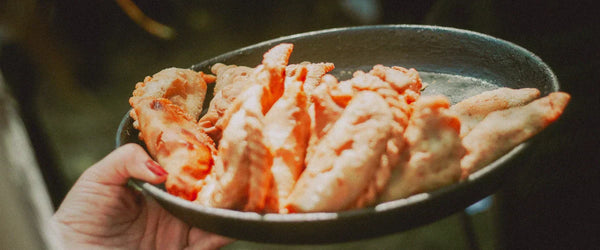
Halal eateries in France typically take French recipes and replace pork and alcohol with ingredients that still work well in terms of texture and taste. We highly recommend trying a halal version of beef bourguignon — which often substitutes wine for extra beef broth or fruit juice while using halal-butchered meat.
You'll also find that halal butchers across France serve rotisserie chickens, and you can sample chicken paillard and duck confit redesigned to suit halal needs at major restaurants across the biggest cities.
[warning]Wine is commonly added as an ingredient in many classic French dishes — sometimes just a dash — even in dishes that may not appear wine-based on the menu. Always ask specifically whether wine is included in a dish before ordering at any French restaurant, including those that identify as halal-friendly. Do not assume a dish is wine-free without confirming.[/warning]Middle Eastern halal food
There are plenty of Middle Eastern and Moroccan restaurants in France that specialise in halal dishes. Chains such as 404 and the high-end Le Confidentiel near the Champs-Élysées are well-regarded options. Look for halal kebabs, grilled meat, and fusion dishes in areas that cater to diverse tastes — the biggest tourist cities are your best starting point.
North African halal cuisine
Demand for North African-inspired halal cuisine is growing across France, and you'll find plenty of options across Marseille and Paris in particular. Look out for spicy merguez, chou farci, and slow-cooked tagines. Le Confidentiel is also a strong option for North African recipes alongside its Middle Eastern menu.
[tip title="Always look for AVS certification when visiting restaurants and butchers"]AVS is a private, non-profit body dedicated to controlling and certifying halal practices in France. If a restaurant or butcher displays AVS branding or certification, it means they are committed to verified halal preparation. In the absence of visible certification, always ask directly — in multicultural areas, this is a completely normal and expected question.[/tip]Where to find halal restaurants in France
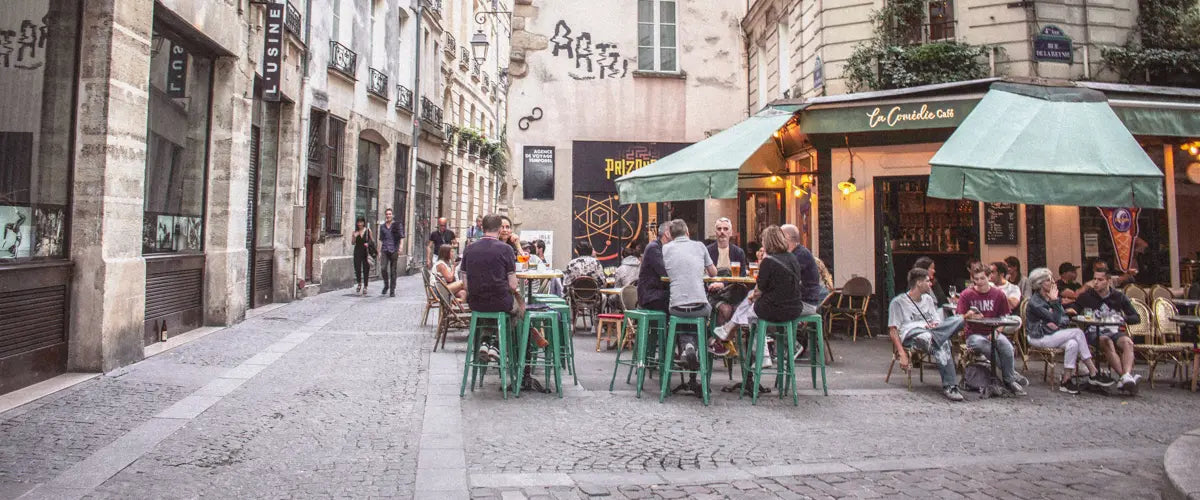
The major towns and cities offer the highest concentration of varied halal-friendly options. In Paris and Marseille, you can find high-end, exceptional halal dining experiences that have been carefully developed over years to suit changing local tastes.
[tip title="Head to Muslim neighbourhoods for the best halal food and produce"]Belleville in Paris is a great starting point — home to a large Muslim population and therefore strong local demand for halal food and drink. Saint-Denis is another excellent area, with some restaurants that don't even serve alcohol on the menu. Supermarkets in these neighbourhoods widely carry halal meat for those who want to cook their own meals.[/tip]Tips for halal travellers in France
Finding tasty halal food in France doesn't have to be a hardship. Here are some final points to keep in mind when exploring the culinary map.
[tip title="Always ask if no certification is visible"]If there are no halal certifications visible at a butcher or restaurant, do not be afraid to ask whether menu items are halal. In multicultural areas of France, this is a completely normal and expected question — staff will not be offended, and most halal-friendly establishments are happy to clarify.[/tip] [tip title="Use TripAdvisor, TikTok, and Instagram for personal recommendations"]Before visiting any halal restaurant in France, check for personal recommendations from other Muslim travellers on TripAdvisor, TikTok, and Instagram. These platforms carry recent, honest, first-hand experiences that are often more reliable than general listings — and frequently highlight newer options that haven't yet made it onto mainstream travel guides.[/tip] [tip title="Check supermarkets in Muslim neighbourhoods for halal meat"]Supermarkets and grocers in Muslim neighbourhoods across Paris and Marseille widely carry halal-certified meat. If you have access to a kitchen during your stay, buying direct from these stores gives you full control over your ingredients and preparation.[/tip] [esim flag="🇫🇷" label="France" data="10GB · 30 days" price="£8" href="/products/france" benefits="Instant QR setup · Reliable 4G/5G · No contract"]Find halal food across France without roaming charges[/esim] [faq] [q]Is halal food widely available in France?[/q] [a]Yes — halal food is more widespread in France than many visitors expect, particularly in major cities like Paris and Marseille. The Muslim population in France is significant, and demand for halal options has driven growth in both dedicated halal restaurants and halal-adapted versions of classic French dishes. Muslim neighbourhoods such as Belleville and Saint-Denis in Paris offer particularly high concentrations of halal food options.[/a] [q]What is AVS certification in France?[/q] [a]AVS (Association de Vérification, de Surveillance et de Certification) is a private, non-profit organisation in France that controls and certifies halal butchery and food preparation. Since France has no national halal certification body, AVS operates as one of the most trusted independent verification organisations. Always look for AVS certification labels when visiting restaurants, butchers, and food businesses in France.[/a] [q]Where can I find halal restaurants in Paris?[/q] [a]The best areas for halal restaurants in Paris include Belleville (a multicultural neighbourhood with a large Muslim community), Saint-Denis (home to many halal-only restaurants, some of which do not serve alcohol), and the tourist areas around the Champs-Élysées where high-end halal dining options including Le Confidentiel are located. TripAdvisor, TikTok, and Instagram are excellent resources for current personal recommendations from Muslim travellers.[/a] [q]Can I find North African food in France?[/q] [a]Yes — North African-inspired halal cuisine is widely available across France, particularly in Paris and Marseille. Dishes to look out for include spicy merguez sausages, chou farci (stuffed cabbage), and slow-cooked tagines. Dedicated Moroccan and Algerian restaurants are common in Muslim neighbourhoods across both cities, and many high-end halal restaurants also feature North African menus alongside French and Middle Eastern options.[/a] [q]Is wine commonly added to French dishes?[/q] [a]Yes — wine is used as an ingredient in many classic French recipes, sometimes in significant quantities and sometimes as just a dash. This applies to dishes including coq au vin, beef bourguignon, and various sauces and braises. Always ask specifically whether wine has been used in a dish before ordering, even at restaurants that identify as halal-friendly. Do not assume a dish is wine-free without confirming with the staff.[/a] [q]Do I need an eSIM for France?[/q] [a]A SIMOVO France eSIM is one of the most practical additions to any trip — particularly for halal travellers who need reliable mobile data to research restaurants, check certification details, and find local recommendations on the go. At £8 for 10GB over 30 days, it activates on landing and connects you to France's best available networks without roaming charges.[/a] [/faq] [esim flag="🇫🇷" label="France" data="10GB · 30 days" price="£8" href="/products/france" benefits="Instant QR setup · Reliable 4G/5G · No contract"]Find halal food across France without roaming charges[/esim]